

Advocates for those who enter our facilities
This past August, I had the privilege of attending the American Society of Interior Designers’ Gather event in Atlanta, where I received the Steward of Distinction award in recognition of The Center for Health Design’s decades of far-reaching, positive impact on transforming health care environments and advancing the health care design field.
It was an incredible honor, but what struck me even more deeply were the many people who sought me out during those days to share their stories about how The Center’s work has influenced them — personally, in their projects or throughout their careers.
Hearing these stories firsthand reminded me of the important and essential role our events, resources, research and community play in helping people make the critical design decisions that improve the lives of patients, families and staff.
The health care design field is unique in its scale of impact. By conservative estimates, nearly a quarter of a billion people around the world interact daily with the global health care system. Think about that: hundreds of millions of people — patients, family members and staff — experiencing health care environments every single day.
For those of us who design, plan, operate and manage these facilities, the potential for influence is extraordinary. Doing work that can positively affect even a fraction of that population is both a privilege and a profound professional responsibility.
In my acceptance speech, I shared that I’ve come to see design as a quiet form of advocacy for those unable to speak for themselves. That perspective is what drew me to this field, and I suspect many of you feel that same tug.
Whether we are architects developing master plans, interior designers creating environments that reduce stress and foster dignity, facilities managers balancing budgets and deferred maintenance or engineers maintaining life safety systems, we are all advocates for the people who will one day walk through those doors.
Over the years, The Center for Health Design has worked tirelessly to bridge the gap between research and practice. For example, we now know that thoughtful design can reduce infection rates, shorten hospital stays, lower stress for families and even reduce staff turnover. But translating that evidence into everyday decision-making takes collaboration across all disciplines — design, engineering, operations and clinical leadership.
Architects bring vision; interior designers contribute a deep understanding of how the environment affects behavior, stress and recovery; health care facilities managers balance efficiency, resilience, safety and healing; and engineers bring technical expertise. Together, these perspectives, informed by research, create facilities that don’t simply house health care but actively support health and well-being.
In the years since the pandemic, resilience has become an imperative. Facilities must adapt not only to public health crises but also to workforce shortages, shifting care models and growing demands for sustainability. Health care environments now need to be flexible and future-proof, able to pivot from routine care to surge capacity or to evolve as technology and demographics change.
The Center’s resources — toolkits, research libraries, webinars and design insights — are intended to help you navigate these challenges. Whether you’re justifying an infrastructure upgrade to your board, seeking evidence for a new lighting solution or advocating for spaces that support staff wellness, there’s a wealth of information available to strengthen your case.
When I think about advocacy in health care design, I often picture the patient who likely will never know your name. They won’t know the air exchange rate in their room or see the fire safety system behind the walls, the wayfinding strategy or the thoughtful use of light and color that makes their stay less stressful. But they will feel safer, calmer and better cared for because of the invisible decisions you made long before they arrived.
That is the quiet power of our work. It’s not glamorous or headline-making, but it is deeply human. And when we connect that quiet advocacy with evidence-based design and a commitment to continuous learning, the impact ripples outward to millions.
As I reflect on the Steward of Distinction award, I see it as recognition of the collective efforts of an entire community — designers, engineers, managers and countless others — who are reshaping health care environments. The challenges ahead are significant: aging infrastructure, climate demands, rising costs and increasing complexity of care. But so is the opportunity.
Every project you touch has the potential to influence not only outcomes but also lives. And when you anchor your work in evidence, collaboration and a shared commitment to advocacy, the impact is immeasurable.
My hope is that, as a field, we continue to embrace that responsibility and see ourselves not just as builders or managers of space but as advocates for the people whose stories unfold inside them. That’s the real legacy of health care design — and one I am honored to share.
About this column
“From The Center” is by the leadership of The Center for Health Design and appears in alternating issues of Health Facilities Management magazine.
Related Articles
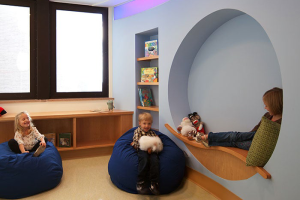
Making sense of health care sensory rooms
Research compiled in The Center for Health Design's Knowledge Repository documents outcomes related to multisensory care spaces.

Integrating robotics into inpatient facilities
Optimizing the design and layout of healthcare spaces to integrate autonomous mobile robots into daily operations.
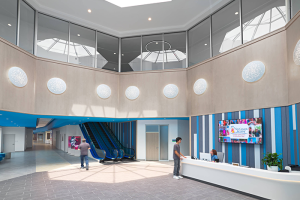
Transforming facilities from retail to healthcare
Innovative architecture strategies to help developers and healthcare owners unlock the future of underperforming real estate.