

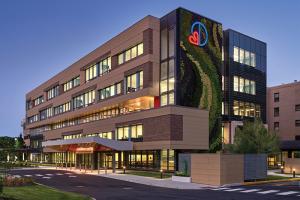
2026 Vista Award winner UAB Medical West
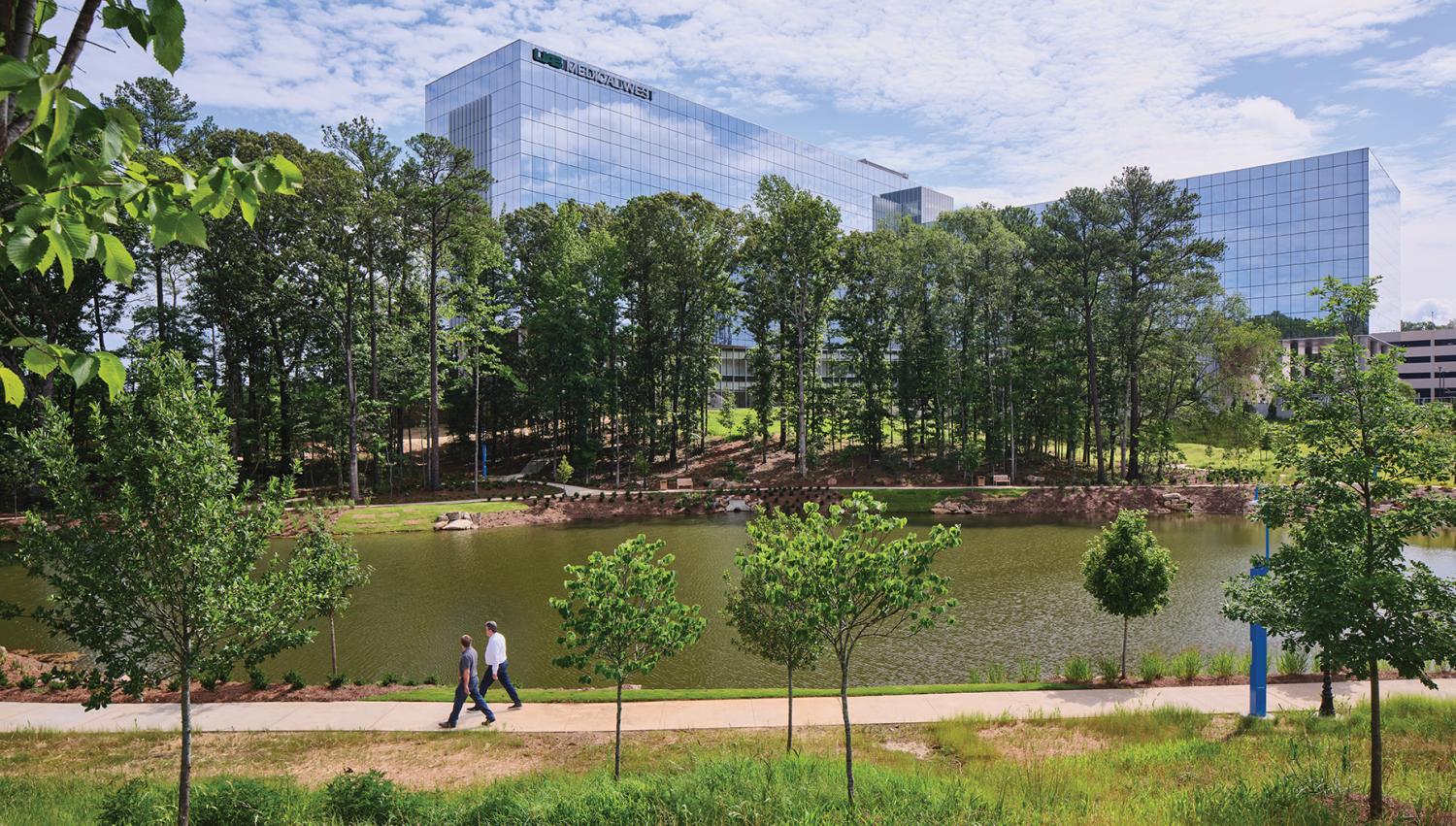
The service area for the Medical West Campus of the University of Alabama-Birmingham (UAB) in Bessemer, Ala., is a largely rural area in West Jefferson County, and patients often travel long distances from neighboring counties to receive care. The previous hospital, opened in 1964, was undersized for the growing population of the area. Furthermore, its services were spread across various disjointed departments with confusing layouts.
“It was time for a replacement,” notes Dan Luhrs, AIA, a principal at HKS Inc., who served as the senior project architect and senior project manager on the UAB Medical West project. “And the second part of it was that they wanted to make their prevention and treatment services more centrally located to the population base they serve.”
The effort to replace the hospital began in 2017. The idea was to create a flexible, efficient and accessible facility that could grow and evolve as the region’s population expanded.
The result is a $298 million structure featuring universal exam, patient, operating and imaging rooms, and modular clinic pods that could accommodate easy shifts in service lines. The accessibility of the design is enhanced with clear wayfinding, short travel paths and intuitive layouts.
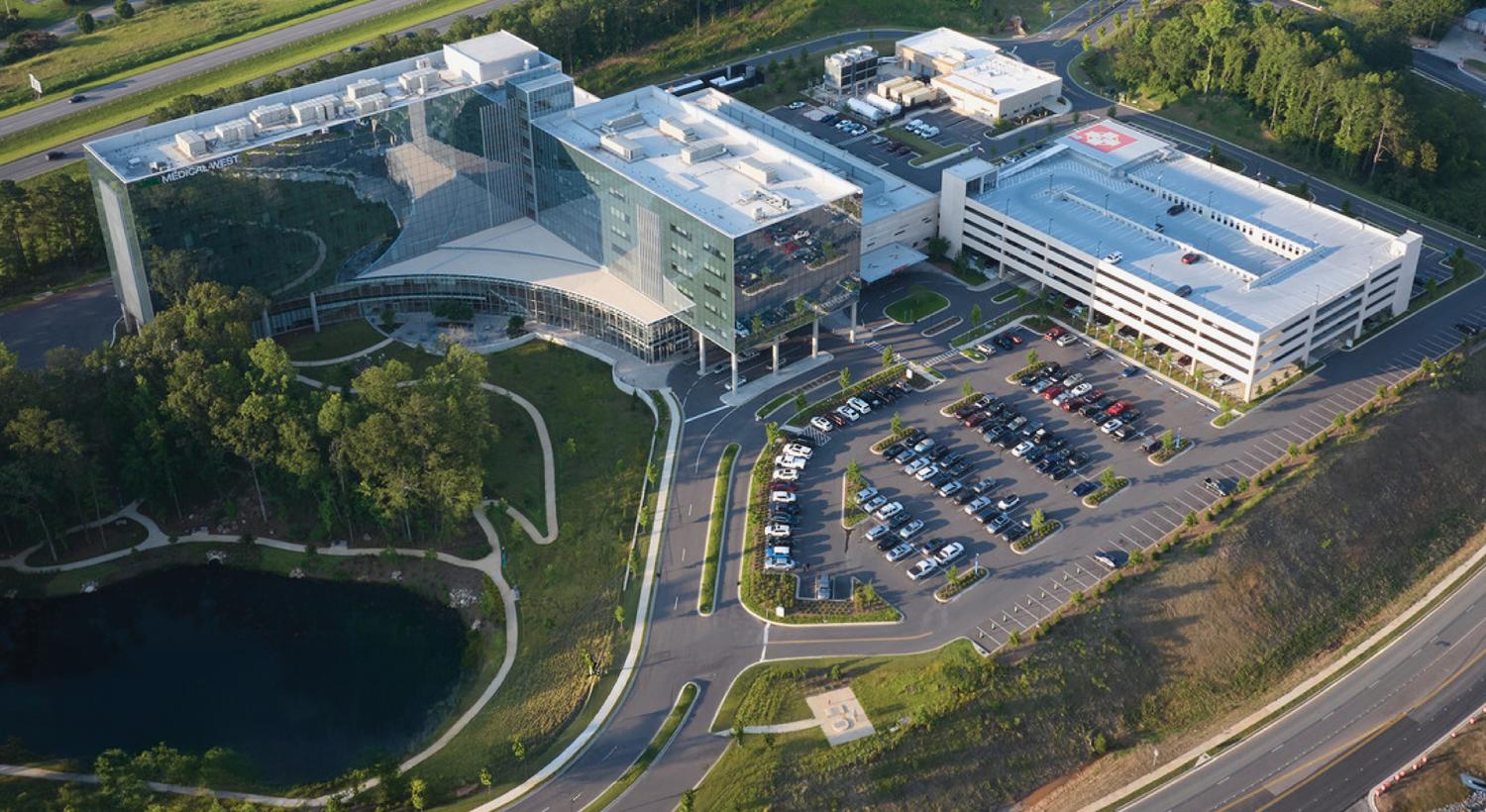
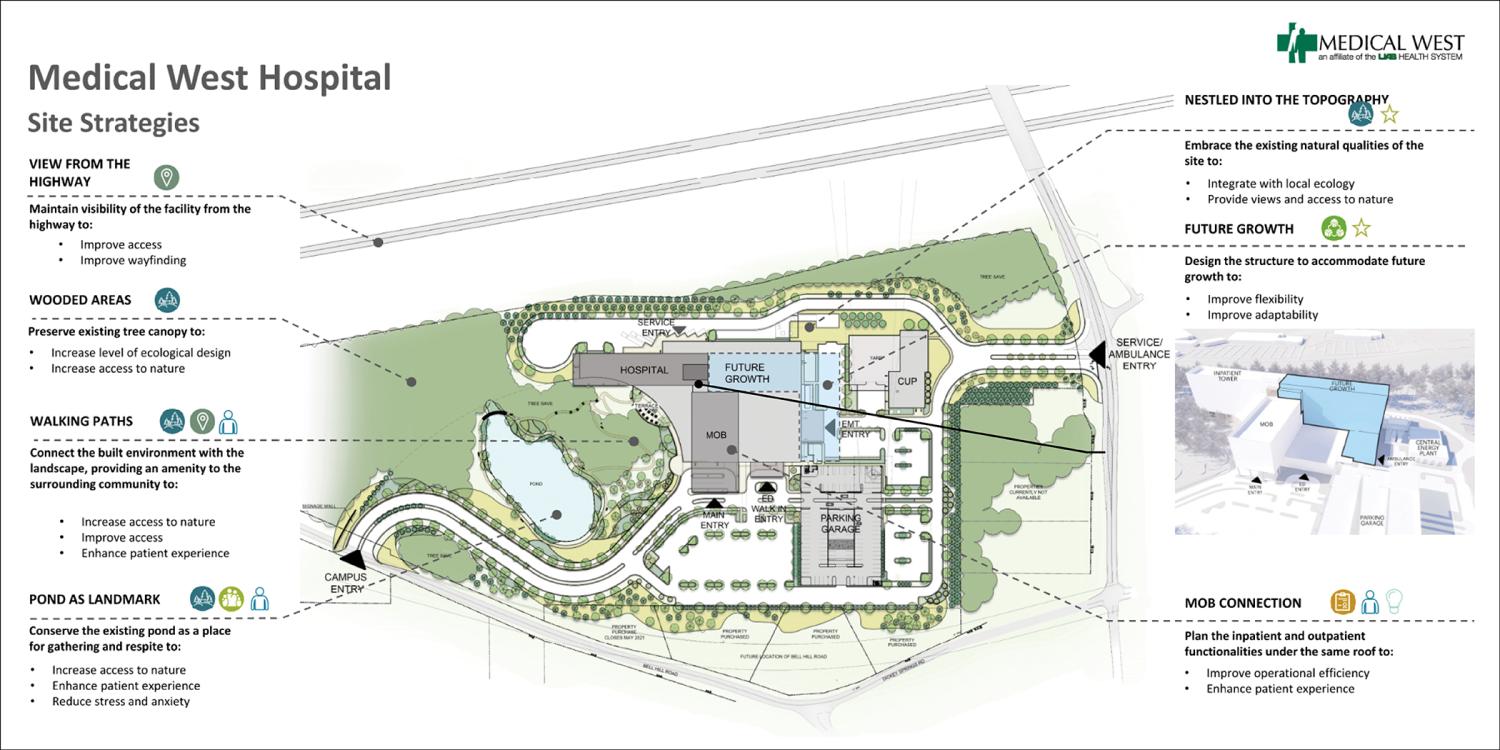
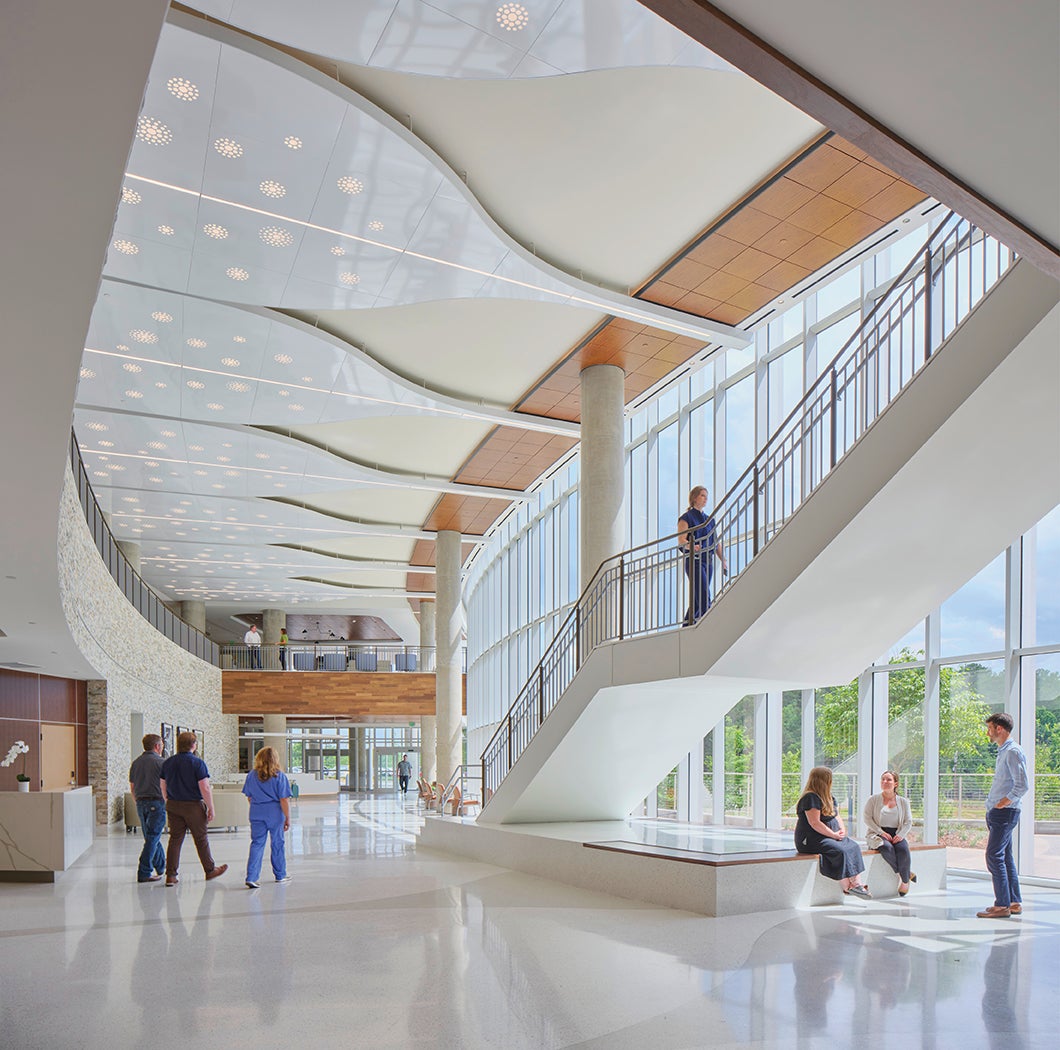
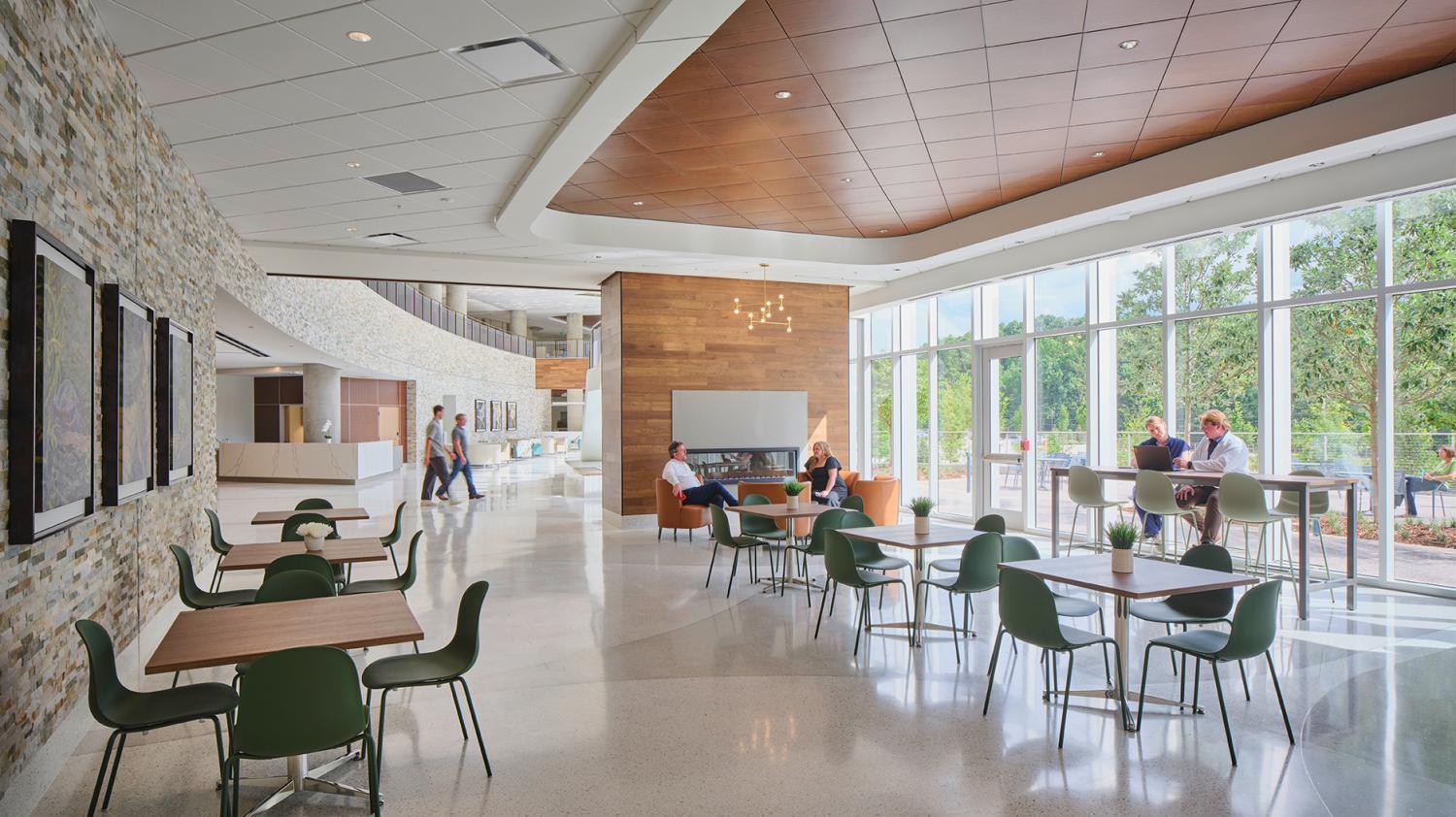
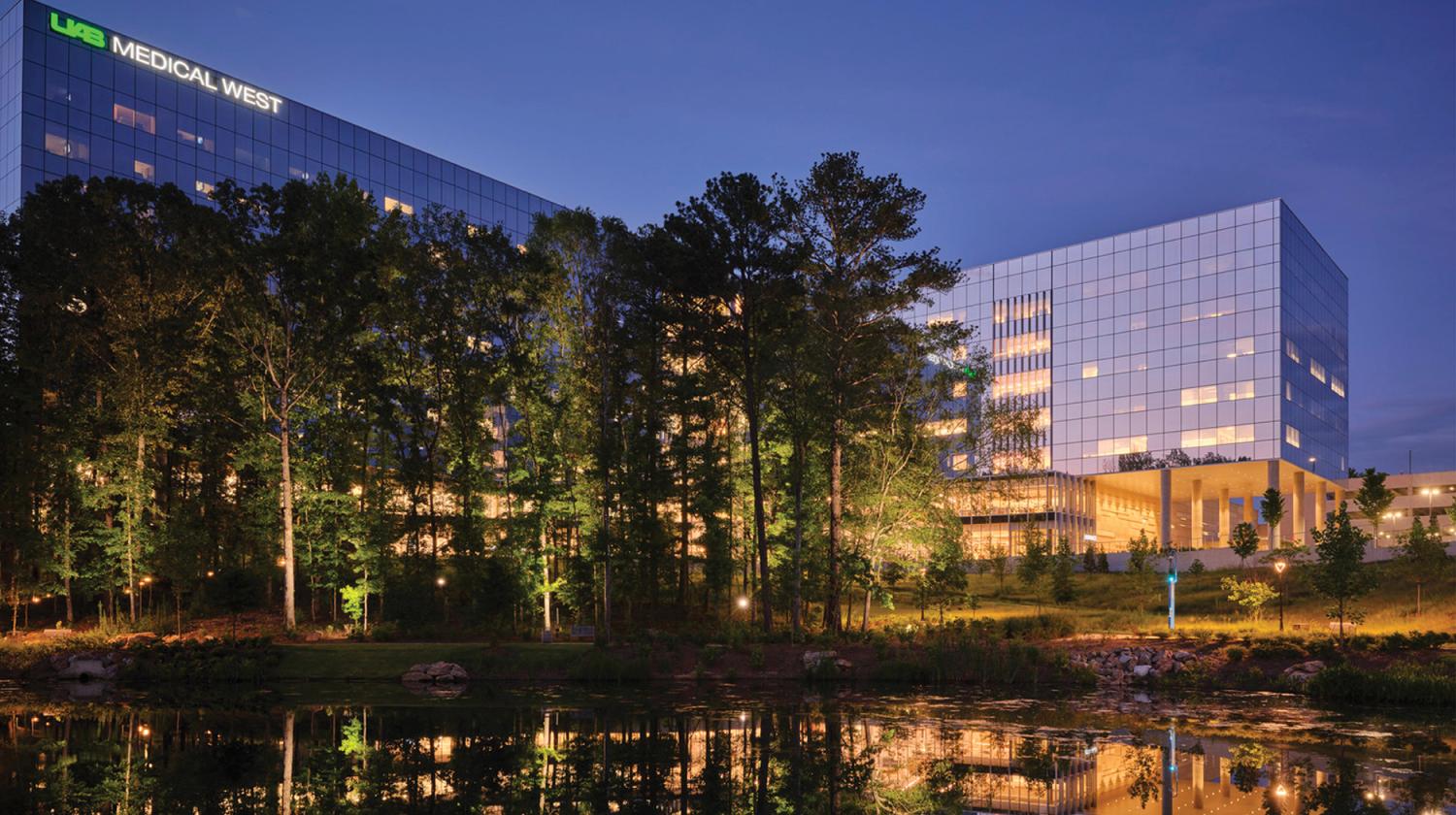
Furthermore, the design takes advantage of its nature-filled location. Floor-to-ceiling windows provide views of the surrounding forests, and a pond surrounded by walking trails offers a tranquil escape for patients, family and staff.
“From what we’ve read and what we’ve seen, the hospital has really worked out well for the community it serves,” Luhrs says. “It really responded to the needs of the community, to make things easier for them. It was great to be part of that.”
Immersive planning
Determining the needs of hospital staff was an essential early step in the design process. Luhrs says he was surprised to learn that the average tenure of department heads in the facility was 24 years, which meant staff was entirely familiar with — and probably quite comfortable with — the existing hospital.
“The fact that they had worked in the hospital that long opened up a dialogue to really begin to understand how we would fashion the design,” Luhrs says. “We do a lot of visioning with our clients. We really like to spend time to dive into their psyche, both their operations and personally. Our biggest takeaway from all that dialogue was we’ve got folks who have been working in a facility that they have adjusted to and conformed to, because humans can do that. And now we’re going to put them in a new facility. And we had to be very, very conscious of the transition they were going to take from ‘making do’ to having it and how that would really work.”
Part of the planning involved simulations, Luhrs explains. They used tape on a warehouse floor to show staff how certain spaces, such as the nursing units and the operating rooms, could be laid out to create more efficient workflows. Doing so also reduced trepidation among staff about the coming changes.
The efforts worked, as evidenced by 46 out of 48 department heads telling Luhrs after the move-in that they prefer the new layout over the old despite their decades of familiarity.
Arising challenges
Design efforts were still underway when COVID-19 crashed onto the scene. Supply chain problems quickly started affecting prices of building materials, so Luhrs and his team recommended purchasing certain materials as soon as possible, even without the quantity details a finished design would have provided.
For example, they immediately ordered several box cars full of sheetrock — which Luhrs estimates saved them $3 million or $4 million — because once the broad outlines of the design were agreed upon, they could make a reasonable estimate of the quantity they would ultimately need. They also made early purchases of curtain wall systems, generators and roof insulation. They rented a nearby 100,000-square-foot warehouse to keep it all until needed.
“Our client was very in tune with that,” Luhrs says. “There’s a risk that goes with procuring material when we’re in early design, but in some parts of the project we were in later design. We were practicing ‘just-in-time,’ but not just-in-time delivery, rather just-in-time design.”
By comparing costs of materials when they were purchased to costs later in the process, the team determined they avoided $32 million in cost escalation.
Another challenge during the design phase was that the hospital leadership decided the new building should have an additional floor. The team responded with collaboration among the structural engineers and construction leads to adjust loading on detailing without stopping the parallel design work. The efforts allowed the new floor to be integrated into the project without delaying the overall timeline.
Smart methods
Thoughtful design and construction methods were essential to the successful creation of UAB Medical West:
- The site’s trees, pond and steep elevation were embraced by the design team. The building is fully glazed, which allows the 125-foot pine trees and nearby wetlands to be beautifully reflected. The Cahaba lily, a native plant that blooms for only two weeks each May and grows in running water, is used as a design feature throughout the ground floor and lobby. “One thing that really stood out to me was that they had to build this hospital into an existing ecosystem — there was a watershed surrounding it — and they did it without disturbing the environment,” says Jason A. Piper, executive director of planning, design and construction at AdventHealth Multi-State Division in Merriam, Kan., who chaired the Vista Award Task Force. “They created a beautiful building on that diverse site that really serves the community.”
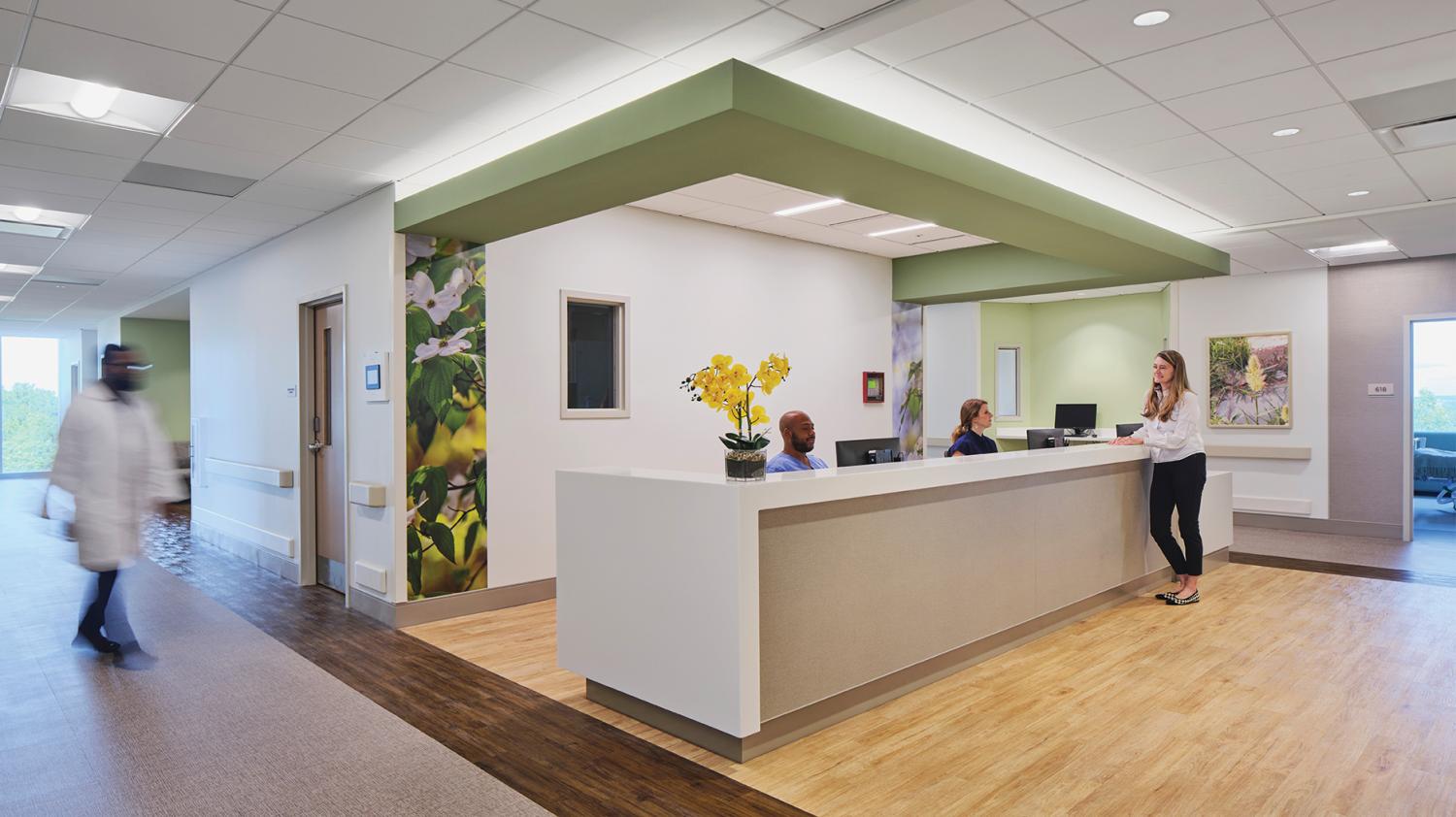
- Patient rooms were created with a scale and size that can be adapted to any future use. “Right now it’s set up for a standard patient room, but it would take two days to convert it to intensive care unit (ICU) level as we understand ICU level at this moment in time,” Luhrs says. “Or we could make it more specific to orthopedics or women’s care or cardiovascular.”
- Key elements of the hospital were prefabricated off-site. For example, the frame systems for the exterior skin were prefabricated and then glazed on-site. Concrete was precast off-site as well, which was more challenging than usual because of its variability. “The precast undulated back and forth; in this area it’s 5 inches thick, and in this area it’s 8, and on this line it’s 12,” Luhrs explains.
Teamwork pays off
Keeping a project as complex as this one running smoothly, especially in view of COVID-19 and design changes, required exquisite teamwork.
Lean integration, shared values and behavioral norms drove the team approach from the outset, starting with a three-day kickoff workshop. Teamwork was facilitated with biweekly “big room” meetings that included the full architecture, engineering and construction team and the UAB Medical West team.
“They were able to maintain their budget and schedule throughout the entire process by using Lean design and problem-solving,” says Mark Patrick Chrisman, Ph.D., PE, health sector executive at Henderson Engineers Inc. in Lenexa, Kan., and a member of the Vista Award Task Force. “That process, plus staying true to their goals, helped them keep it all going. It takes everyone — the executive team, designers, construction team, folks in the community and the care team — to help make sure it’s all tied in together.”
Savings and satisfaction
The new hospital, which opened in August 2024, enjoyed 30% lower utility costs in its first year of occupancy. Other improvements have included reduced staff travel times between departments, streamlined operations due to the colocation of clinics and overall staff satisfaction.
The hospital surveyed staff on a variety of factors, asking for input about satisfaction on a score from 1 to 5. General aesthetics ranked 4.7, environmental awareness (wayfinding, etc.) ranked 4.65 and overall staff experience earned 4.5.
“All of the categories were basically 4.5 or above, which is pretty impressive,” Piper notes. “Especially considering that this project survived some pretty big hiccups. And they still finished on time and on budget.”
Ed Avis is a freelance writer based in Chicago.
Related Articles

The 2026 Vista Award winners
ASHE honors UAB Medical West and Morristown Medical Center for team-based new construction and infrastructure projects.
Expansion elevates cardiac care
Deborah Heart and Lung Center goes vertical to add 36 private patient rooms, improving care acuity transitions.

A look back at the PDC Summit student challenge 10-year anniversary
Evoking the spirit of collaboration, the 2025 PDC Student Design Challenge continued to bring classroom lessons to life via a multidisciplinary charrette.