

Access control devices for health care security
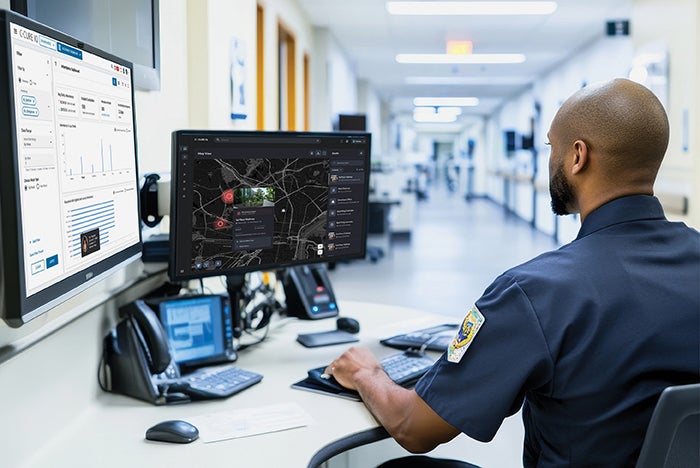
Image courtesy of Cummins Inc.
Hospitals must remain open and accessible 24/7 while maintaining strict control over restricted areas. Many facilities still rely on numerous keys to secure pharmacies and laboratories, though many have integrated those physical access points into networked key control systems that record transactions, creating real-time visibility and audit trails.
Other trends include the convergence of multiple access control technologies to align with the operational and security needs of hospitals and the evolution of simple card access systems to facility-
wide solutions that are integrated, touchless and mobile. Moreover, cloud solutions continue to drive technology trends for health care facilities, with hospitals adopting cloud-enabled access control for real-time monitoring, scalability, remote management and accessibility to artificial intelligence (AI) insights.
“We’re seeing increased use of touchless door activation and interlock systems that help prevent cross-contamination and help control traffic between sterile and public areas,” says Skip Burnham, national sales manager at Dortronics Systems Inc. in Sag Harbor, N.Y. “Delayed egress locks and panic buttons also enhance staff safety during emergencies and help deter incidents such as infant abductions.”
Electronic locks can be set to open or lock at specific times. This is important because medical staff need to access different areas and storage cupboards at different times. Using a code that is unique to an individual means that their usage patterns become known, and any anomalies are noticed.
Additionally, many small outpatient clinics are turning to compact electronic key and asset control cabinets that deliver the same level of accountability found on hospital campuses but require less infrastructure. “These systems also offer browser-based management and automated notifications for overdue keys or asset returns, enabling remote management across sites,” says Tim Purpura, global vice president of sales and marketing at Morse Watchmans in Oxford, Conn.
Systems approach
A layered and zoned approach that uses the hospital’s security management policy to identify sensitive areas with different security needs can help determine where access control, video surveillance and biometrics can have the greatest impact.
Johnson Controls in Glendale, Wis., offers access control ecosystem points for staff, patients and visitors. “For example, our touch-free access control solution for a contactless experience helps maintain hygiene and prevent cross-contamination in high-exposure settings,” says Raf Schrijvers, senior product manager of international markets for security systems.
Alongside frictionless access control systems, Johnson Controls offers other solutions that are integral to hospitals, such as smart readers, wireless and offline locks, and visitor management software. This last element is crucial to tying these ecosystems together to improve health care security operations. “Also, while key fobs and cards remain critical to safeguarding critical assets, the introduction of streamlined options such as mobile credentials and biometric access enable hospitals to operate at higher speeds,” Schrijvers notes.
Siemens Smart Infrastructure USA in Buffalo Grove, Ill., offers the Building X Security Manager, a cloud-based, integrated access control solution. It includes a security monitoring and insights dashboard that provides real-time visibility to access events, alarms and incidents, as well as mobile access integration that enables staff to use smartphones or wearables for secure, touchless entry. The incident and alarm management feature helps ensure that security incidents are addressed swiftly and consistently.
“A self-service portal allows employees to request access changes through predefined workflows,” says Dave Stolerow, national business manager for smart buildings and security at Siemens Smart Infrastructure USA. “A configurable approval process with delegation options streamlines the process for hospitals that have numerous badged employees or facilities.” A new feature enables the creation and management of manually entered incidents.
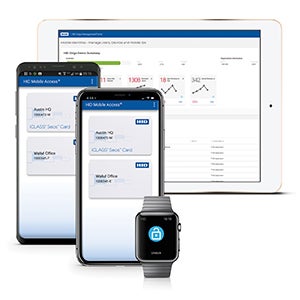
HID in Austin, Texas, continues to expand its mobile access solutions, which offer intuitive user experiences and actionable data insights. This includes the HID Mobile Access app and wallet credential platforms, which support a wide spectrum of mobile devices. “They can now be paired with our HID Origo Bridge, a channel-ready integration tool that enables rapid, no-code deployment,” says Amanda Venafro, director of end-user business development for health care and life sciences. “We’ve also enhanced our HID Signo Reader by offering HID Linq, which enables remote reader configuration, seamless firmware updates and real-time system insights.”
Genetec in Montreal offers Operations Center, a cloud-based work management solution that helps health care teams streamline their overall security operations. “Operations Center facilitates task assignment, work dispatching, asset and resource management, real-time collaboration and customizable workflows,” says Dale Martin, health care key account manager. “By replacing spreadsheets and disconnected tools with a unified platform, it helps teams better communicate, coordinate tasks more efficiently and stay on top of day-to-day operations.”
Locking devices
Detex Corp. in New Braunfels, Texas, offers a delayed egress with latch retraction in one panic bar, electric dogging to lock down facilities with one button push and tailgate detection to ensure that only one individual enters a secured doorway for each card read. Electric dogging is designed for entrance and exit doors with panic or fire exit hardware. Additionally, one-touch operation turns any secured door or group of doors into push-pull openings and releases them as required.
Also available is a delayed egress with latch retraction option, which is designed for applications where both delayed egress and remote unlocking, remote dogging, access control or an automatic operator is desired. “The alarm in the remote interface module, with about 100 decibels, will sound when someone attempts to exit,” says Tim Shafer, sales consultant for Detex. “The alarm will continue to sound, but the door will remain locked for 15 seconds, which deters unauthorized exit and gives the responsible party time to respond to the alarm.”
Securitech Group Inc. in Berlin, Conn., offers shelter-in-place locksets. Products such as the Safebolt and QID mortise lock feature a red button that instantly locks down the door in a code-compliant manner. Electrified QID mortise locks integrate with access control systems for daily use. “A unique feature is card access lockout when the red button is pressed to secure the door,” says Mark J. Berger, vice president for integrated security products. “There is always a risk that an assailant might be a credentialed employee or may have taken an employee’s credential. This protects those within the shelter-in-place room. They can always allow others into the room and relock the door.”
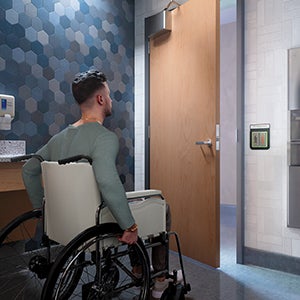
Allegion in Carmel, Ind., introduced the Schlage L Series motorized latch retraction locks, which use a quiet motor to retract the latch bolt on command, so a door can be opened without turning the lever. This enables doors to be opened by wave actuator, push-button or integrated automation without touching hardware, thus reducing cross-contamination. Paired with an auto operator on the door, these latch retraction-capable locks make it easier for staff wheeling carts, patients in wheelchairs and visitors to pass through to help meet Americans with Disabilities Act requirements.
“The locks integrate with fire- and life-safety systems to permit rapid, reliable egress when needed,” says Melany Whalin, director of demand creation. “They are capable of momentary or continuous latch retraction, and some functions offer configurable (fail-safe/fail-secure) lever control. As part of an electronic access control system, the locks work with card readers and door management systems to allow only authorized access — reducing propped-open doors and unauthorized entry.”
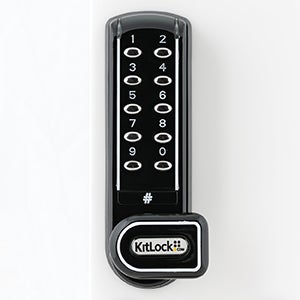
Codelocks Inc. in Rancho Cucamonga, Calif., offers KitLock, an alternative to traditional key-operated locker locks. The KL1200 NetCode locker lock includes updated features. “NetCode technology allows for flexible, temporary access,” says Matt Welty, vice president. “Hospitals can generate access codes with restricted use, specifying a start date and time and setting a fixed duration, after which the code will no longer be accepted.”
For privacy and patient confidence, Codelocks launched the CL5000 Do Not Disturb with privacy capabilities, which creates more comfort for people undergoing examinations or treatment or tending to personal needs. The feature is activated by pressing a red button on the inside, which prevents unauthorized access by ensuring that only a master code, sub-master code or key override can unlock the door.
The RCI YD30 series electronic locks are offered by dormakaba North America in Indianapolis. The YD30 can pull a door into a seal and release less than 1,350 pounds of sideload, which can create a sealed environment for clean rooms. For behavioral health, the YD30 features a high holding force, anti-ligature qualities and flush installation. All door and bolt sensors are built in, which keeps anyone from restricting entry or exit.
The YD30 is a sound access control solution for glass doors, according to Benjamin Sultze, assistant vice president of business development for health care at dormakaba. “As hospitals continue to focus on patient experience, the increased use of glass for light transmission creates a challenge to providing robust access control solutions. The YD30 is a sound replacement for magnetic door locks and reduces the energy load of the facility,” says Sultze.
Dortronics Systems introduced the CleanWave 5279 Series touchless switch, a touch-free access control solution designed to enhance hygiene and reliability in high-traffic spaces. “CleanWave uses microwave motion technology to detect a hand wave within a 4- to 24-inch adjustable range, ensuring accurate activation only when intended,” Burnham says. “CleanWave’s sealed, easy-to-sanitize faceplate and LED status indicator make it a sound solution for contamination-sensitive areas. It also integrates with automatic doors and maglocks.”
KeyWatcher Touch and SmartKey Locker systems from Morse Watchmans continue to evolve through software enhancements and new integrations with security platforms. The systems allow hospitals to manage keys, assets and credentials from a unified dashboard for better enforcement. “Paired with our software, they provide full audit trails, customizable alerts and enterprise-wide reporting — tools that help hospitals comply with [standards and guidelines],” Purpura says.
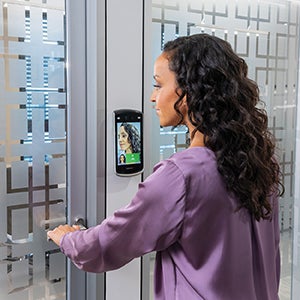
Control iD iDFace and iDFace Max facial identification readers from Assa Abloy Opening Solutions in New Haven, Conn., use biometric technology that converts a person’s facial image into an encrypted digital template. “By eliminating the risks of lost badges or shared personal identification numbers (PINs), Control iD’s biometric authentication strengthens security. In addition, touchless entry reduces cross-contamination risks, while hands-free access improves staff flow during peak times,” says Tom Morgan, AHC, FDAI, director of business development for health care door security solutions.
“We’ve also seen hospitals expand use cases beyond traditional key storage, applying our systems to secure medication keys, controlled substances and small devices like tablets and radios,” Morgan says. “These applications expand system capabilities while strengthening accountability and operational continuity across departments.”
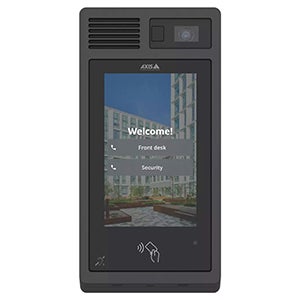
Finally, Axis Communications in Chelmsford, Mass., has introduced several intercoms that improve access control. The latest solution is the Axis I8307-VE network video intercom. Two levels of analytics include object analytics using a 4K camera and audio analytics at the edge. Access control has a multi-frequency reader, enabling customized PIN pads and support of QR codes. “Fifty credentials can be stored locally on the unit or integrated with access control software systems to add credentials,” says Paul Baratta, manager of industry segments for the Americas.
Advances ahead
Future advances in health care access control will include the integration of AI and machine learning for automated threat detection and behavioral analysis, enhanced biometric and mobile access via smartphones, and touchless technologies for improved hygiene, according to Shafer. “The growth of the Internet of Things will enable more connectivity between devices, facilitating remote management and unified security systems through cloud-based platforms and multi-factor authentication,” he says.
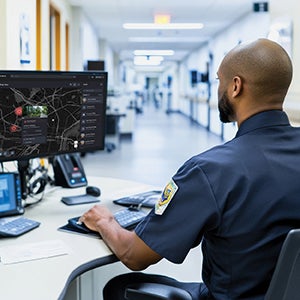
CENTRAL COMMAND
C•CURE IQ from Software House provides easy management of access control and video surveillance in a single interface. Johnson Controls

OPERATIONAL PROTECTION
The Building X Security Manager protects people and assets with the inclusion of easy alarms and incident management. Siemens Smart Infrastructure USA
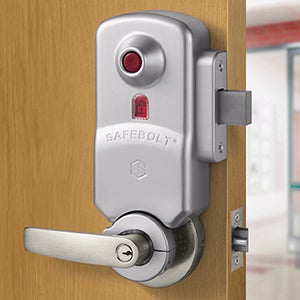
ALL SECURE
Shelter-in-place locksets feature a red button that instantly locks down the door in a code-compliant manner. Securitech Group Inc.
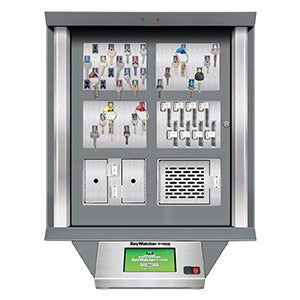
EASY ACCESS
KeyWatcher Touch systems help health care facilities manage access to keys, assets and sensitive areas. Morse Watchmans
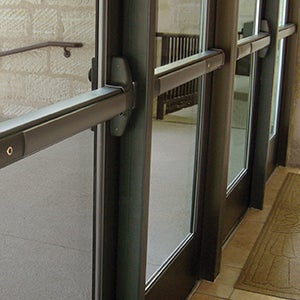
PUSH OF A BUTTON
Designed for entrance and exit doors, electric dogging hardware locks down facilities with one button push. Detex Corp.
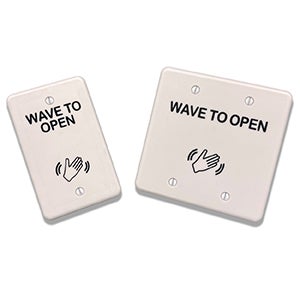
NO HANDS
The CleanWave 5279 Series touchless switch features precise, contact-free door activation that helps prevent cross-contamination. Dortronics Systems Inc
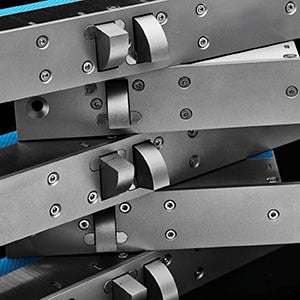
LOCKED TIGHT
The RCI YD30 low-voltage, motor-driven door lock features a high holding force, anti-ligature qualities and flush installation. dormakaba North America
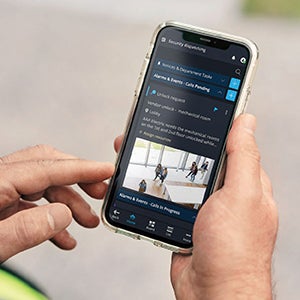
CLOUD CONTROL
Operations Center is a cloud-based work management solution that helps health care teams streamline their overall security operations. Genetec
READY TO GO
Mobile Access solutions offer intuitive user experiences and actionable data insights along with improved security. HID
FACE TIME
Control iD facial identification readers use biometric technology to convert a person’s facial image into an encrypted digital template. Assa Abloy Opening Solutions
EXTRA PROTECTION
The Axis I8307-VE network video intercom provides a valuable layer of protection for sensitive areas of hospitals. Axis Communications
MOTOR-DRIVEN
Schlage L Series motorized latch retraction lock opens a door without turning the lever, enabling touchless access, seamless traffic flow and safer, compliant door operations in hospitals. Allegion
Neal Lorenzi is a Mundelein, Ill.-based contributor to Health Facilities Management.
Product inclusion in this article should not be construed as an endorsement by Health Facilities Management, ASHE or the American Hospital Association.
Related Articles

Video security systems see continued advances
Features include artificial intelligence, Internet of Things and more.

Solutions: Security, interior surfaces and plumbing products
Security, interior surfaces, plumbing and other products for health care facilities on our radar.
Access control devices advance for health care
Improved connectivity and added features help hospitals bolster security.