

The facilities manager’s role in reducing healthcare-associated infections
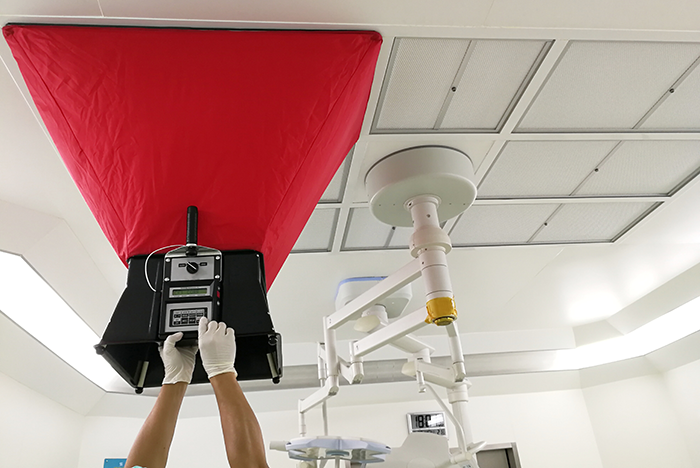
Facilities teams must ensure proper containment during inspection, testing and maintenance procedures, such as during airflow testing to verify proper air-change rates.
Image from Getty Images
The very first requirement in a hospital is that it should do the sick no harm.
—Florence Nightingale, 1863
Florence Nightingale, an icon in the field of infection prevention and control (IPC), was one of the first infection preventionists to recognize that pathogens that can cause infections are present in the healthcare physical environment. Environmental transmission pathways in healthcare that can lead to healthcare-associated infections (HAIs), as illustrated in Figure 1 below, include building infrastructure and equipment such as heating, ventilating and air-conditioning (HVAC) systems and water distribution systems. Healthcare facilities engineers care for these structures and equipment in such a way that one could refer to the physical environment as their “patient.” And through maintenance and proper operation of these systems, engineers ensure a safe environment for the care of human patients.
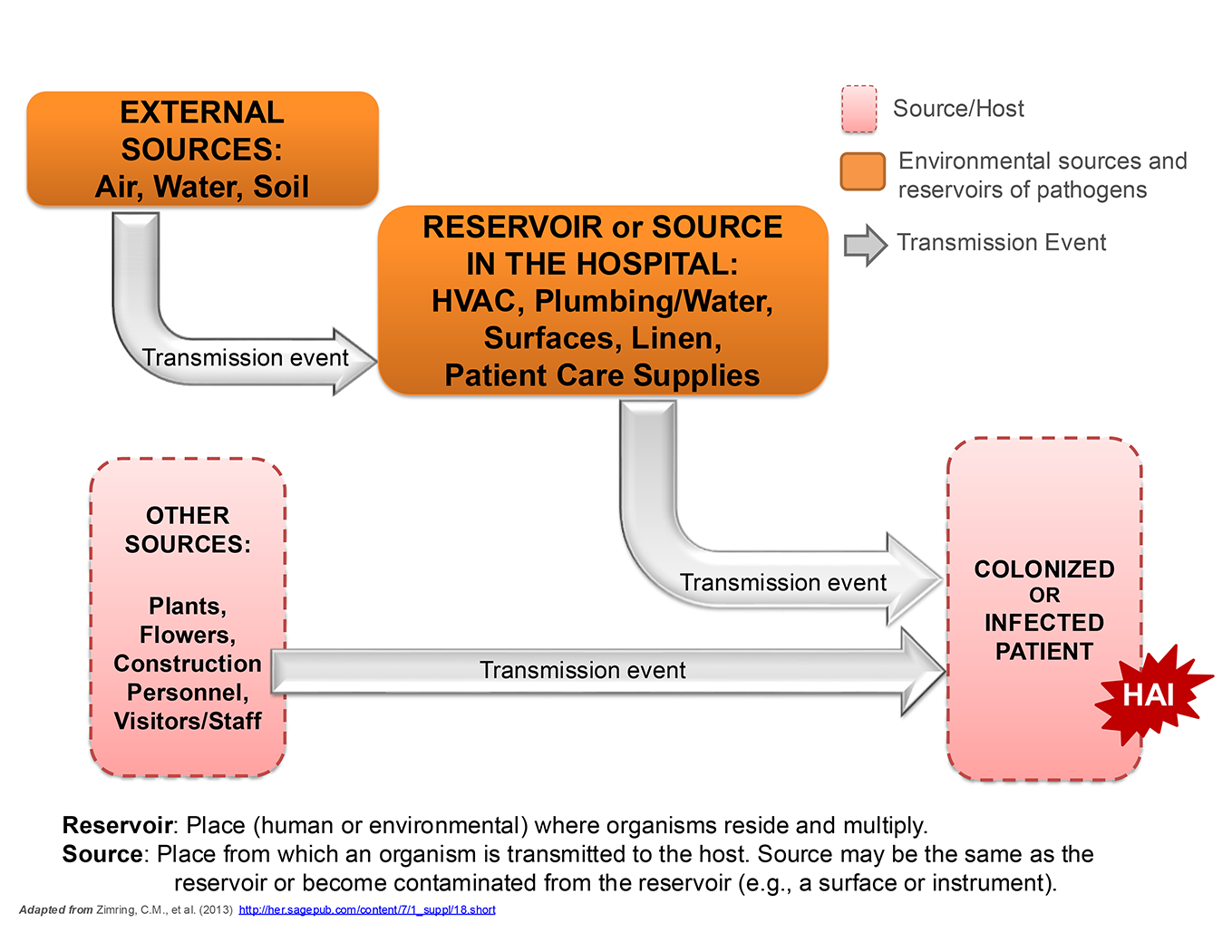
Click image to expand and view caption
Healthcare facilities environments, including HVAC systems, water distribution systems, surfaces and finishes, can be a source of infection in up to 40% of HAIs, which are a serious cause of patient morbidity and mortality. The Centers for Disease Control and Prevention (CDC) estimates that on any given day, one out of every 31 patients develops an infection related to an environmental exposure.
These in-house risks are reflected in national surveillance data showing that environmental failures continue to contribute to patient harm. Investigations of infections among susceptible patients indicate there are up to 5,000 deaths due to construction- or renovation-related work in healthcare settings each year — the majority of which are mold-related infections. Reservoirs of molds also can lead to outbreaks or clusters of infections in hospitalized patients.
Causes and effects of common molds
Two common types of molds, Aspergillus and mucormycetes, are regularly found in everyday environments but are present in higher numbers in damaged or decaying building materials. They have been associated with infections related to construction, repair work and water-damaged materials.
While they pose less risk for healthy individuals, exposure to mold and spores can cause deadly pulmonary infections in immunocompromised patients, who are especially susceptible due to the underlying effects of diseases and treatments that suppress their immune systems. This includes patients at both ends of the age spectrum — very old and very young, whose immune systems are under-developed — as well as patients who have received stem cell or solid-organ transplants, those who are under treatment for cancer and patients impacted by medications that compromise the immune system. Fungal pathogens are opportunistic, taking advantage of patients who cannot mount an effective immune response to fight off infection or are compromised in some other way, such as burn patients and patients without intact skin barriers, who may succumb to invasive fungal wound infections.
Aspergillus. This is a group of molds that produce spores that can readily become airborne during disruption of the physical environment. Fungal spores are microscopic, and when they travel through the air or are deposited on surfaces in hospitals, they have a greater chance of being transmitted to patients who are susceptible to infection. In addition to construction and renovation, routine facilities work such as removal of suspended ceiling tiles, disturbance of contaminated fire-proofing material or insulation and even excavation of grounds outside of the facility can introduce Aspergillus spores into the hospital and lead to an outbreak of infections.
Water intrusion into hospitals also can lead to mold growth on porous organic materials like wood, drywall, insulation material and ceiling tiles. When these surfaces are disturbed, mold spores can be released, leading to transmission events such as those illustrated in Figure 1 above.
Gaps in facilities operations work, like improper maintenance of filters in air-handling units, variations in relative humidity and indoor temperature, or alteration of designed space pressure relationships also may result in contamination of the hospital environment with mold spores.
As caretakers of critical facility systems, and with so many potential risks for patient exposure to fungal pathogens in the physical environment, this highlights an important role for the healthcare facilities management team as active participants in infection prevention efforts: identifying, addressing and even anticipating potential risks from construction, remediation, maintenance and repair work in their facilities.
Mucormycetes. Other types of molds, such as Rhizopus and Mucor species, cause an infection called mucormycosis. Several recent investigations found that linens used in hospitals were a source of these infections. Facilities engineers may wonder how they would be involved in prevention efforts if their teams don’t handle or distribute linens. However, HVAC systems have been found to disseminate mold spores that, when deposited onto damp, unprotected linen, cause contamination and expose patients to these infection-causing organisms.
The source of one notable outbreak was traced to processing at an off-site laundry facility, where clean linen was contaminated by lint that was allowed to accumulate near the exhaust on the rooftop. The exhaust was in proximity to an unfiltered intake for supply air. Cleanup of the roof as well as installation of filters in the supply air intake ended the outbreak.
Facilities engineers’ understanding of air-handling systems makes them an important partner in infection prevention efforts, identifying issues for correction during inspections of off-site laundering facilities or in thinking outside the box to identify other system breaches that may create opportunity for dissemination of mold or mold spores (see Figure 2 below).
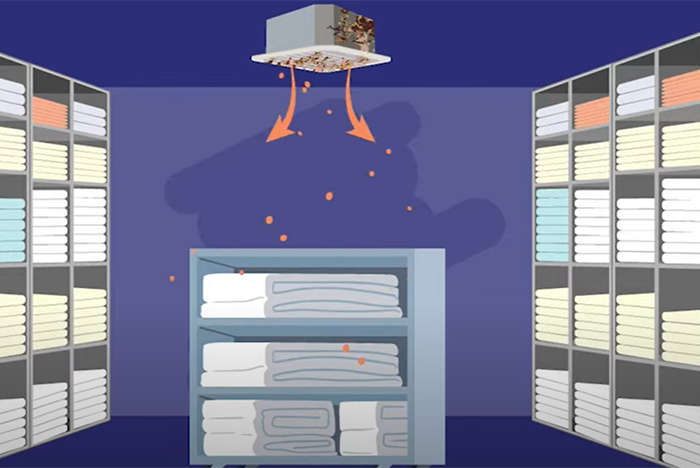
Figure 2. Compromised HVAC systems can contaminate clean linens and lead to patient infections.
Illustration from the Centers for Disease Control and Prevention
Mitigation measures to be included in design
Environmental risk for these types of infections, which are commonly transmitted from surfaces, water systems or air, are carefully considered during the design and use of healthcare spaces. American National Standards Institute/ASHRAE/American Society for Health Care Engineering Standard 170, Ventilation of Health Care Facilities, recognizes these inherent risks and calls for enhanced ventilation of critical spaces where procedures like surgeries are provided or high-risk patient groups are housed. Standard 170’s design parameters use engineering controls to keep patients, personnel and visitors safe and are more effective than other tactics like administrative controls and personal protective equipment in a hierarchy aimed at minimizing hazards and exposures in healthcare facilities.
Filtration, a key component of HVAC systems, can include HEPA filters. These capture mold spores, as well as bacteria, pollen and other small airborne pollutants, and are used for air supplied to critical spaces, including operating rooms for orthopedic, transplant, and other specialized surgeries, as well as rooms that house hematopoietic stem cell transplant recipients or burn patients. Ventilation to certain critical spaces is required to be continuously maintained as positive differential pressure to protect surgical sites and susceptible patients from mold that could enter the room from the outdoors or from less clean occupied spaces.
Mitigation measures for construction and operations
Compliant ventilation design provides a key defense against the spread of mold spores to occupants. But healthcare is a 24/7 operation with daily physical environment activities that, although necessary, can pose a risk to patients when done without proper protections in place. Work that should be risk assessed includes construction and renovation, remediation, and ongoing maintenance and repair work.
Given the potential risks posed by facilities issues, what is the role of the facilities team in keeping patients and personnel safe? In any type of facilities work, communication with key stakeholders is the first step. The facilities team as well as other personnel provide “eyes” on the physical environment to identify issues that pose heightened risk so that mold contamination is contained and corrected before patients can be affected. Organizations must develop effective reporting structures and processes to ensure that facilities staff are aware of potential issues.
Resources
The facilities team also must be poised to identify, escalate and prioritize systemic issues that require additional resources, coordinated efforts or accelerated timelines to comprehensively address issues. Action plans for addressing issues both big and small should be developed with stakeholders, including hospital operations leadership, IPC and other safety partners. These partners can be engaged in coordinated responses when issues that endanger the patient care environment are reported. Collaborating with IPC to shape policies and action plans, as well as leveraging consultants in the industrial hygiene field, will be advantageous to the process and provide expert knowledge on risks and remediation strategies. Facilities teams may consider expanding their teams to include an industrial hygienist. (See the Infection Control & Hospital Epidemiology article “Integrating an industrial hygienist into the infection prevention and control program” published in 2024 for more information.)
With strong communication procedures in place, facilities teams should work with peers across disciplines to develop policies based on certain types of work. Common types of work that should be assessed include:
Construction and renovation. Before any healthcare construction project begins, a formal pre-construction planning process must be developed to identify hazards, define containment strategies and establish roles and responsibilities. This process includes a documented project risk review, site walk-through and coordination meetings involving facilities, IPC, safety, clinical leadership and contractors. Planning and implementation of infection control risk assessment (ICRA) program requirements reduce anticipated concerns and infection risks. A valuable resource is the American Society for Health Care Engineering ICRA 2.0® Toolkit.
Risk-reduction strategies for construction/renovation work include:
- Conduct reviews and approval of the project from the planning stage to on-site work by collaborating with the IPC team, which completes ICRA documentation and permits;
- Perform routine inspections and document pressure monitoring;
- Conduct environmental monitoring when indicated in critical spaces;
- Isolate, seal and protect ventilation systems serving the construction area from contamination, including from exterior excavation activities that may introduce soil-borne fungal spores; and
- Release work areas for occupancy only after ceilings are closed, surfaces are finished and a terminal cleaning has removed all visible dust.
Remediation. When mold contamination or water intrusion occurs, remediation activities must be coordinated by a multidisciplinary team, including IPC, environmental health and safety, facilities and an industrial hygienist. These partners assess the extent of contamination, define containment requirements and verify that remediation work meets health and safety standards.
Risk-reduction strategies for water-damaged materials include:
- Prompt removal and replacement of water-damaged building materials, which is essential to prevent mold growth and subsequent patient exposure;
- Address or remove and replace materials such as drywall, ceiling tiles, insulation and porous furnishings that become wet in accordance with established infection control guidance;
- Perform work within containment (i.e., measures used during construction) to prevent spores from dispersing in the air during removal;
- Document drying, removal and replacement activities to verify that conditions conducive to mold growth have been eliminated; and
- Maintain written remediation protocols that define how water intrusion and mold contamination are detected, evaluated, cleaned and verified.
Remediation and HVAC system cleaning activities should be performed in accordance with recognized industry standards, including but not limited to: the American Industrial Hygiene Association; the American National Standards Institute/Institute of Inspection, Cleaning and Restoration Certification; and the National Air Duct Cleaners Association. These resources provide detailed requirements for water damage remediation, mold removal, cleaning contaminated ventilation systems and verifying that HVAC systems are free of debris and microbial contamination before being returned to service.
Maintenance and repair work. The healthcare facilities management team oversees utilities management and repair/renovation work. These activities are recognized risks for HAIs because they can disturb environmental reservoirs of microorganisms or allow amplification of pathogens within building systems. Safety programs integrate engineering controls, preventive maintenance and multidisciplinary ICRAs into routine facility operations, recognizing that building systems function as critical clinical infrastructure and that their failure can directly impact morbidity and mortality.
The facilities manager must understand and comprehend the role of facilities operations in mitigating the risk of patient infections.
Risk-reduction strategies for the facilities team to help prevent mold contamination during daily work include:
- Maintenance of filters and conditioning of supply air;
- Air-handler maintenance and operation, including regular inspection of insulation, cooling coils and fan units;
- Periodic inspection of supply diffusers and return air grilles in patient care spaces for obstructions and dust accumulation;
- Prompt identification and repair of leaks, as well as repair of associated building damage;
- Dust control measures to prevent release of dust during repairs and preventive maintenance;
- Supporting efforts to keep linens clean and dust-free by maintaining HVAC systems and assisting with inspection of contracted laundering facilities.
Daily maintenance and repair work also requires communication and collaboration with the IPC team. For instance, the team should communicate work orders in patient care and support spaces and verify whether ICRA and mitigation measures are needed. They also should inform IPC of water intrusion into clinical care areas, including ambulatory care settings; share results of periodic test and balance surveys; and communicate excursions in any areas with critical ventilation, including operating rooms, sterile storage, airborne infection isolation rooms, protective environment rooms, bronchoscopy rooms and other sensitive spaces.
Education and training. It is important for facilities teams to increase awareness among all their staff — from the front line to the leadership level — of the underlying risks of their activities that necessarily disrupt the physical environment. This includes raising awareness that unseen mold spores may have deadly consequences for the hospital’s most vulnerable patients.
In-service training and job aids are two methods for disseminating information that show front-line staff that the routine actions they take, which may be perceived as insignificant — from moving a single ceiling tile to disrupting a wall for a plumbing investigation — can cause devastating outcomes if uncontrolled. Education also provides opportunities to show that, conversely, harm can be prevented if the risks are properly anticipated and controlled. Providing both information and the right tools for staff to complete repairs and preventive maintenance work using control measures that protect patients and the patient care environment from mold and mold spores is vital to preventing everyday work from becoming everyday exposures.
Protecting the vulnerable
Preparing and implementing effective infection prevention and control measures can have real and impactful effects on patient safety. The healthcare physical environment plays a critical role in preventing healthcare-associated infections (HAIs.) Facilities managers are essential in maintaining safe physical environments by proactively managing construction, water damage, HVAC systems and routine maintenance. Through risk assessment, adherence to infection control guidelines, collaboration with infection prevention teams, and education and training, facilities teams can significantly reduce patient exposure to pathogens, including molds like Aspergillus and mucormycetes, thereby protecting the most vulnerable patients and improving overall patient safety.
Robert D. Booth, MPH, CIH, is senior healthcare consultant and infection control preventionist at Oncore Inc.; Sarah Clock, Ph.D., MPH, is program manager of infection control in construction, facilities and the healthcare environment at NewYork-Presbyterian Hospital; and Russell N. Olmsted, MPH, CIC, FAPIC, is director of infection prevention and control for integrated clinical services at Trinity Health. They can be reached at rbooth@oncorerisk.com, sac9044@nyp.org and olmstedr@trinity-health.org.
Related Articles

Nuvolo launches regulatory compliance management to tie survey readiness directly to maintenance work
New capability maps regulatory standards to assets so healthcare organizations can build compliance evidence as work gets done.

Optimizing healthcare infrastructure through enterprise asset management
How Montefiore Einstein implemented a single source of truth for building spaces and infrastructure assets.
Security ecosystem helps manage risk
City of Hope partnered with Motorola Solutions to developed a layered security strategy for its 100-acre California campus.