

Modular building accelerates care delivery in rural locale
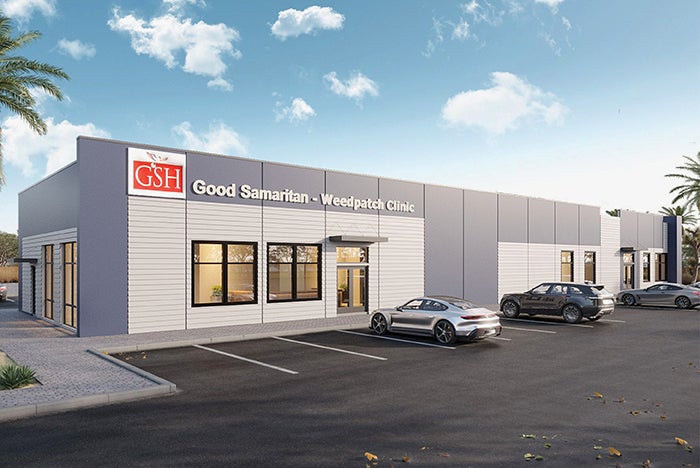
Good Samaritan has embraced a factory-to-clinic model to bring two new clinics to its underserved patient population.
Image courtesy of EIR Healthcare
Kern County, Calif.-based Good Samaritan Hospital is adding two volumetric modular clinics — three-dimensional, fully enclosed building modules manufactured off-site and then transported — to create the Weedpatch Integrated Wellness Center in Bakersfield, Calif.
The new facility will serve approximately 3,500 patients a year in one of the most medically underserved areas in California. In Kern County, there is approximately less than one primary care doctor for every 2,000 people, and their health care challenges include limited access to crucial services. Good Samaritan’s expanded focus includes women and children, and the center will provide primary care, OB-GYN, psychiatry and medication-assisted services.
“Our patients have waited far too long for accessible, comprehensive care,” says Minty Dillon, CEO of Good Samaritan Hospital. “By using modular construction, we are bringing medical, behavioral health and substance use services together under one roof, delivered faster and more efficiently than ever before. This approach isn’t just building a clinic; it’s building healthier futures.”
Both 6,000-square-foot prefabricated structures will use Philadelphia-based EIR Healthcare’s MedModular platform, dubbed a “hospital room in a box.”
Barriers to new construction, especially in rural areas, typically include extended timelines, limited local skilled labor and high costs. However, with 80% of the physical structure completed off-site, this factory-to-clinic construction model proved ideal for the Weedpatch Integrated Wellness Center.
Project delivery timelines can be reduced from as long as three years to as quickly as one using prefabrication. It also gives facilities managers and engineers a repeatable, easily scheduled process for developing and opening a permanent, fully equipped clinical space more quickly for patients.
Plant Prefab, a B Corp-certified company based in Kern County, was contracted to manufacture the modules.
Production began in the third quarter of 2025, and the factory completed the first of two units that same year. The entire clinic is expected to be operational by mid to late 2026, in alignment with California’s health initiatives and as a working model for rapid and cost-conscious replication throughout the state.
“We are proud to partner with EIR Healthcare to bring these clinics to life, especially in our own backyard of Kern County,” says Steve Glenn, CEO of Plant Prefab.
Related Articles
NFPA weekly update: Sept. 14-18
A tentative interim amendment on weapons detection systems was added to NFPA 5000, Building Construction and Safety Code.
The facilities manager’s role in reducing healthcare-associated infections
From multidisciplinary communication to establishing safety procedures for construction, remediation and maintenance, facilities teams play a critical hand in reducing patient infections.
AdventHealth expands in Tampa Bay with new patient tower
Expected to open in 2029, the new six-story patient tower at AdventHealth Carrollwood will expand inpatient and surgical services for the rapidly growing area.