

Rural hospital reaps benefits through sustainable upgrades
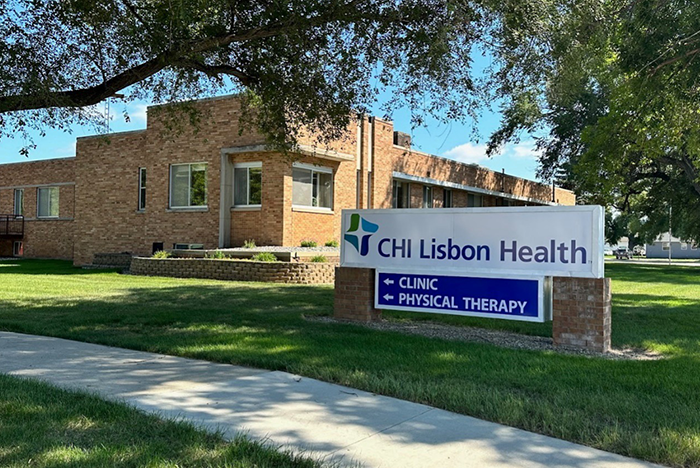
The facilities management team at CHI Lisbon Health have made small, consistent changes to achieve significant energy savings.
Image courtesy of CHI Lisbon Health
Built in 1950, CHI Lisbon (N.D.) Health is a 60,315-square-foot critical access hospital located in rural southeastern North Dakota. The 20-bed facility serves a community of approximately 2,175 residents and provides primary care, a 24-hour emergency trauma center, and rehabilitation as part of the Chicago-based CommonSpirit Health system.
Despite its small size and limited resources, CHI Lisbon Health has quietly emerged as one of the most energy-efficient facilities in the CommonSpirit Health portfolio. From 2013 to 2024, the hospital reduced its energy use intensity (EUI) from 229 to 133 — a 42% reduction — demonstrating that meaningful sustainability gains are achievable without large capital investments.
Energy evolution
The hospital’s energy evolution began in 2012 following a transition in facilities management leadership that brought fresh perspectives and renewed focus to operational efficiency and sustainability. At the time, the hospital relied on aging heating, ventilating and air-conditioning infrastructure, including coal, propane and hot domestic water due to the absence of natural gas service. The system required significant maintenance, operated inefficiently and produced high amounts of greenhouse gas emissions. Energy performance reflected these challenges, with an EUI of 229, annual energy consumption of 13,825 million British thermal units (MMBtu) and annual energy costs totaling $245,000.

Additional challenges included outdated fluorescent lighting controlled by manual switches, inconsistent illumination across spaces and original single-pane windows dating back to the hospital’s 1950 opening. These conditions diverted facilities staff from higher-value work and limited their ability to support patient, visitor and staff needs.
The timing of facilities leadership transition aligned with CommonSpirit Health’s newly established sustainability goals, providing the catalyst to explore energy-saving technologies such as LED lighting, electric boilers, an improved building automation system (BAS) and upgraded windows.
Converting to efficiency
Starting in 2013, operational conversions were underway. The first step was converting all fluorescent and high-intensity discharge lighting to LED, improving light quality, consistency and efficiency across the hospital. Staff response to the lighting retrofit was overwhelmingly positive, and pilot discussions are underway to evaluate occupancy sensors in select areas.
Next, the team addressed the hospital’s high-pressure steam system, which operated at 55 pounds per square inch and supported operating rooms (ORs), sterilization and laundry services but suffered from leaks and excessive energy use. By outsourcing laundry services and installing an independent steam generator on each OR sterilizer, the hospital was able to convert to a low-pressure system, which significantly reduces energy consumption and maintenance demands. These changes enabled the facilities team to focus on other hospital initiatives.
In 2014, CHI Lisbon replaced its oversized and inefficient coal and fuel oil boilers. With natural gas unavailable, the team selected electric boilers supplemented by a fuel oil backup system for extreme cold conditions. This early electrification decision played a major role in lowering emissions. Installation was completed during the summer of 2014 to avoid disrupting hospital operations.
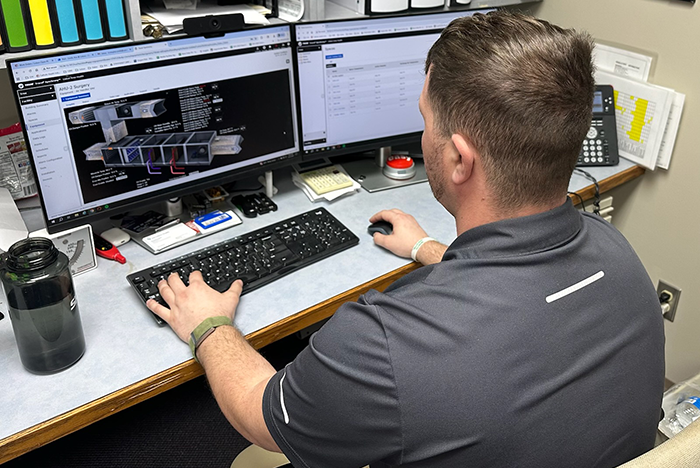
CHI Lisbon Health Facility Manager Kristopher Smith monitors the hospital's building automation system (BAS), which has undergone modernization to help maximize the hospital's energy-efficiency improvements.
Image courtesy of CHI Lisbon Health
To ensure these upgrades worked together efficiently, the team next focused on modernizing the BAS. The upgraded direct-digital control system enabled improved equipment sequencing, setpoint control, discharge air resets and boiler temperature optimization — connecting prior investments into a single, intelligent system that maximized performance without compromising patient, visitor and staff comfort.
Additional improvements followed, including replacing original single-pane windows with double-pane, low-emissivity units; sealing infiltration points; insulating steam lines; and regularly replacing steam traps. While incremental, these measures have produced meaningful, long-term gains through consistent preventive maintenance.
Measurable results, lasting impact
The cumulative effect of these initiatives has been substantial. From 2013 to 2024, CHI Lisbon has:
- Decreased its EUI by 42% (229 to 133);
- Cut annual energy use from 13,825 MMBtu to 8,021 MMBtu;
- Reduced greenhouse gas emissions by 19%, or approximately 286 metric tons annually;
- Decreased annual energy costs from $245,000 to $180,000; and
- Achieved approximately $350,000 in total savings from 2014-2024.
The hospital’s energy cost savings have been redirected toward patient care and facility improvements rather than utility expenses, a significant achievement for a rural hospital with limited staff and budget.
Playing the long game
CHI Lisbon’s success underscores an important lesson: hospitals do not need massive capital investments to achieve meaningful energy and emissions reductions. Progress comes from a long-term commitment, starting with manageable projects, executing them well and steadily building momentum.
This approach, combined with thoughtful decision-making, consistent preventive maintenance and collaboration across departments, has embedded a culture of continuous improvement that remains strong today.
The work is not finished. Future plans include upgrading air-handling units, continuing window replacements as needed and piloting an occupancy sensor program in select spaces. CHI Lisbon is committed to sustaining its progress and ensuring the facility remains efficient, resilient and well-positioned for the future.
Kristopher Smith is the facility manager at CHI Lisbon (N.D.) Health, and Ahmad Amin, PE, is the ambulatory energy manager for national real estate services at CommonSpirit Health headquartered in Chicago. They can be contacted at kristopher.smith@commonspirit.org and ahmad.amin@commonspirit.org.
Related Articles

NFPA weekly update: Oct. 12-16
The National Fire Protection Association issued a tentative interim amendment to the Life Safety Code regarding noncombustible materials.
NFPA weekly update: Sept. 28 to Oct. 2
A tentative interim amendment to NFPA 99, Health Care Facilities Code, on medical gas piping is open for public comment.

Healthcare may hold the key to long-duration energy storage adoption
Reflections from a healthcare perspective on the Long Duration Energy Storage Summit and the need for resilience and reliability.