

2025 Salary Survey results
The 2025 Salary Survey shares strategies on how to retain valued team members.
Image from Getty Images
Competitive compensation remains essential for attracting qualified facilities candidates, which can be challenging for health systems already operating under tight margins. This tension makes it even more important to promote other areas of job satisfaction that extend beyond compensation. In today’s market, job seekers are overwhelmingly looking for flexibility in their career and a work-life balance that health care facilities teams are working hard to deliver.
“Work-life balance is critical,” says Gordon Howie, MS, CHFM, CHC, SASHE, regional chair, facilities and support services, for Mayo Clinic Health System in Eau Claire, Wis. “In my career of close to 30 years, a healthy work-life balance and mental health have never been more top of mind for a lot of people.”
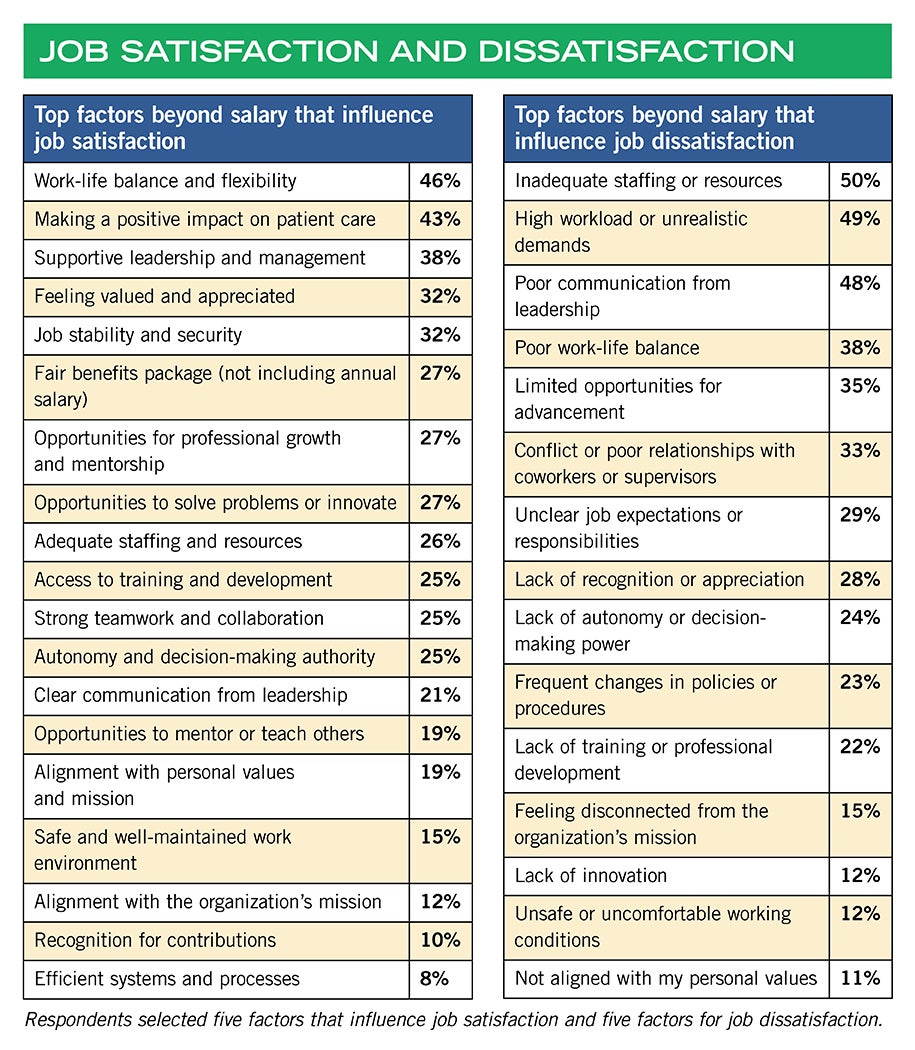
In fact, work-life balance and flexibility is a top 5 leading factor influencing job satisfaction for 46% of respondents to the 2025 Salary Survey, which tracks management and compensation trends. Yet achieving this balance is challenging in a role that often demands around-the-clock attention. The biennial survey, conducted by the American Society for Health Care Engineering’s (ASHE’s) Health Facilities Management (HFM) magazine, received responses from 1,199 facilities, construction, environmental services (EVS) and safety professionals, among others.
Michael Hatton, MBA, CHFM, FASHE, vice president of facilities, engineering and construction for Memorial Hermann Health System in Houston and 2025 ASHE president, also says work-life balance is a priority for health care operations. “It has been a problem my entire career,” he says. “I’ve been in the health care facilities sector more than 30 years, and I don't know that work-life balance has gotten any better. As the organizations have gotten flatter, I think it’s only magnified that health care facilities management is a 24/7 job.”
Valued employees
Expectations for greater work-life balance have grown in part out of the explosion of remote working opportunities in other fields. However, flexibility on the job also is increasingly an expectation for younger workers.
“Our newer generations, including millennials, have a different way of working,” Hatton finds. “They’ll get out of the office by 2:30 p.m. to make it home in time for Little League games, but then they log on at night to do their administrative work.”

For 38% of survey respondents, job satisfaction depends upon having supportive leadership that enables this type of flexibility. As one anonymous survey respondent shared, “I needed to take a two-month leave of absence for family reasons. Not only did my vice president and human resources director strongly encourage this, but I also was never contacted or bothered in any way the entire time.” This individual added, “I felt so taken care of.”
Thirty-two percent of survey takers agree that feeling valued and appreciated influences their job satisfaction. That recognition can take many forms. “There are many times when jobs are completed, and we receive recognition for our hard work and the quality of our work,” wrote one respondent. “Leadership and administration work hard here, and that promotes an environment where everyone can get on board.”
Simple strategies to offer this recognition can make a difference in team satisfaction. As one survey respondent shared, “Supporting my team with more training opportunities, leadership development and recognition programs would not only boost morale but also create a stronger, more resilient workforce. Seeing my team grow and succeed is one of the most rewarding parts of my role.”
Howie says one of the best ways to help employees feel valued is to ensure that leadership listens. “We have listening sessions with our line-level team. We offer a safe zone where, as long as it’s respectful, you can say what you think. And if there’s something that can be done, they will do it,” he says. “Where I’ve seen things break down in the past is when there’s no follow-through.” He emphasizes that whether or not leadership can act on suggestions, it’s important to acknowledge the issues and help employees feel safe to speak up.
In addition to feeling valued, workers also want to feel value in the work that they do. Forty-three percent of survey respondents noted that their ability to make a positive impact on patient care directly impacted their job satisfaction. This is particularly the case for younger generations.
Click chart to expand and view more data
“The younger people we have in our office are hard workers, and they’re dedicated to the cause,” Howie says. “You want to talk about a generational thing: having a cause that they can get behind inspires loyalty among our younger folks.”
The impact of the mission on job satisfaction was evident in numerous comments from survey takers. When asked to describe a moment at work when they felt especially proud or fulfilled by their work, many respondents mentioned patient interactions. “It feels good to fix whatever problem the patient is having,” wrote one anonymous respondent.
“When I understand the ‘why’ behind decisions and the direction leadership wants us to move in, I’m better able to align my work and support others effectively,” another professional wrote. “Overall, small improvements in communication and support go a long way in helping me feel valued and empowered in my role.”
Navigating compensation
If a connection to the mission is important for many workers, so too is, as one survey taker put it, “fair compensation for the work that is done [and] not continually expecting more for the same wages.”
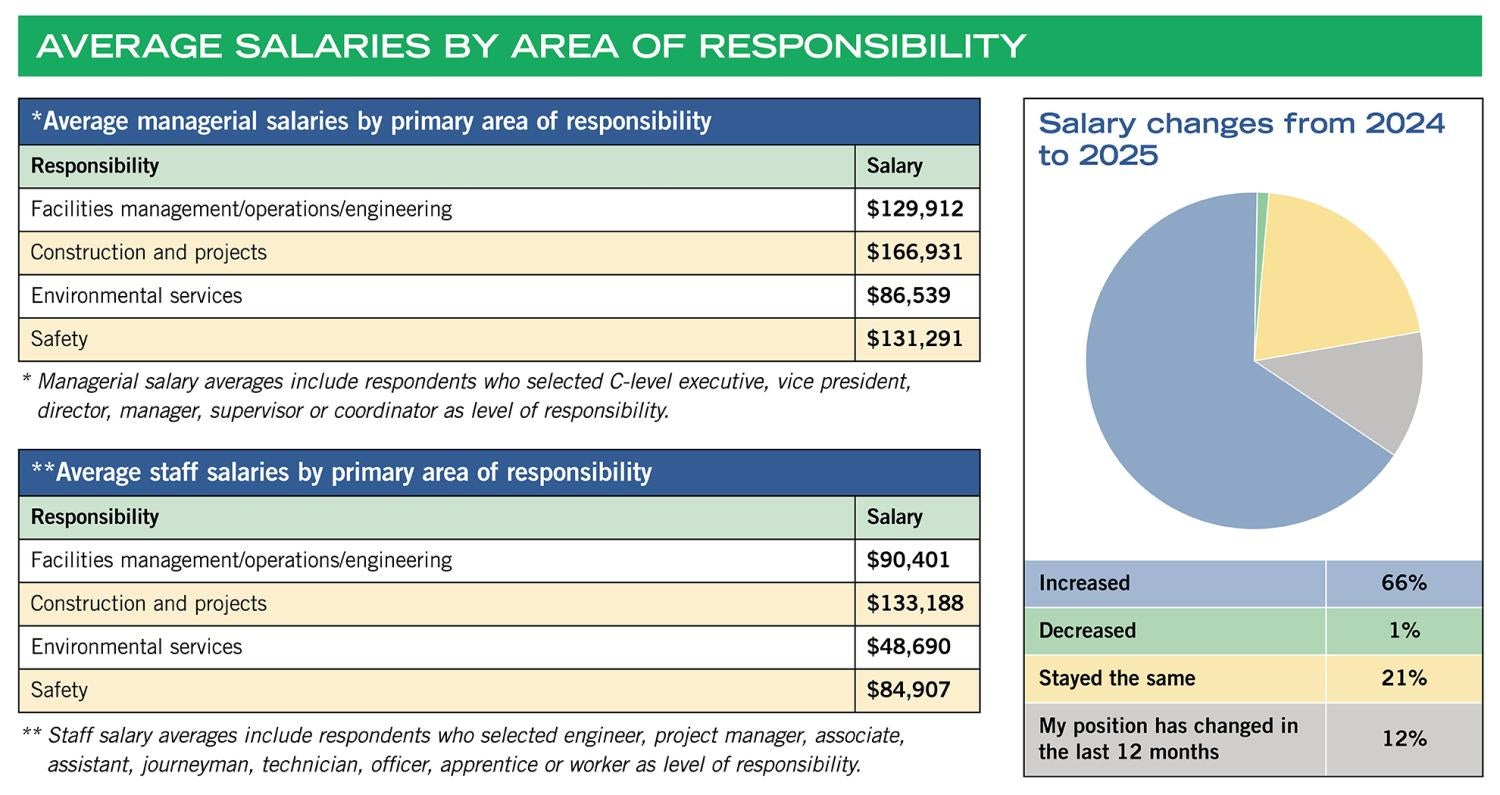
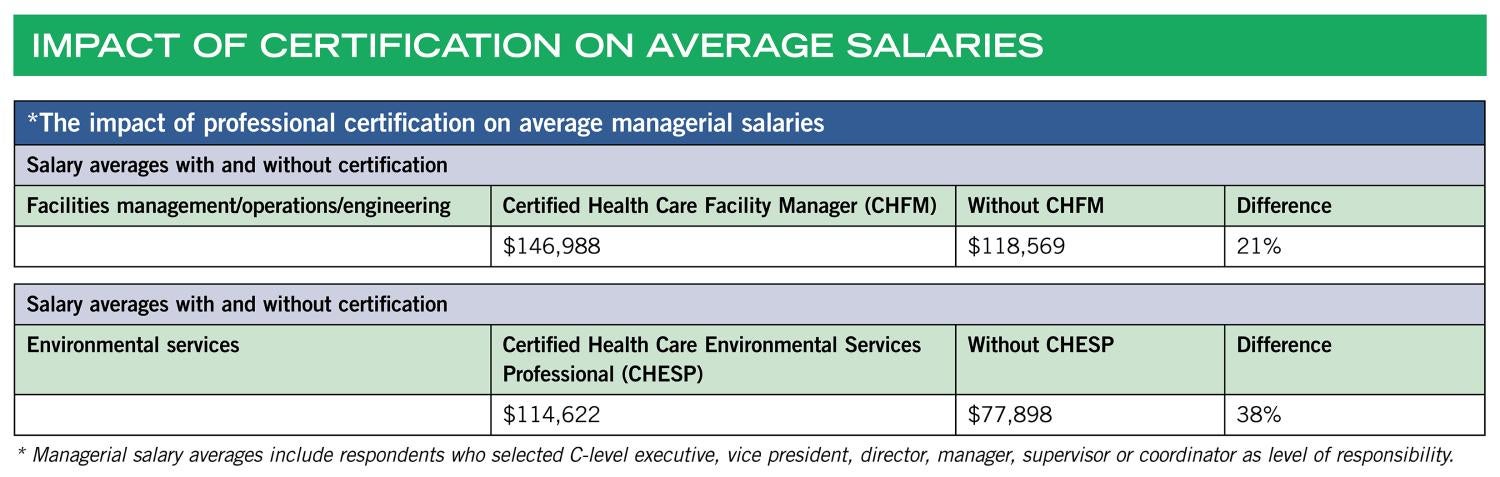
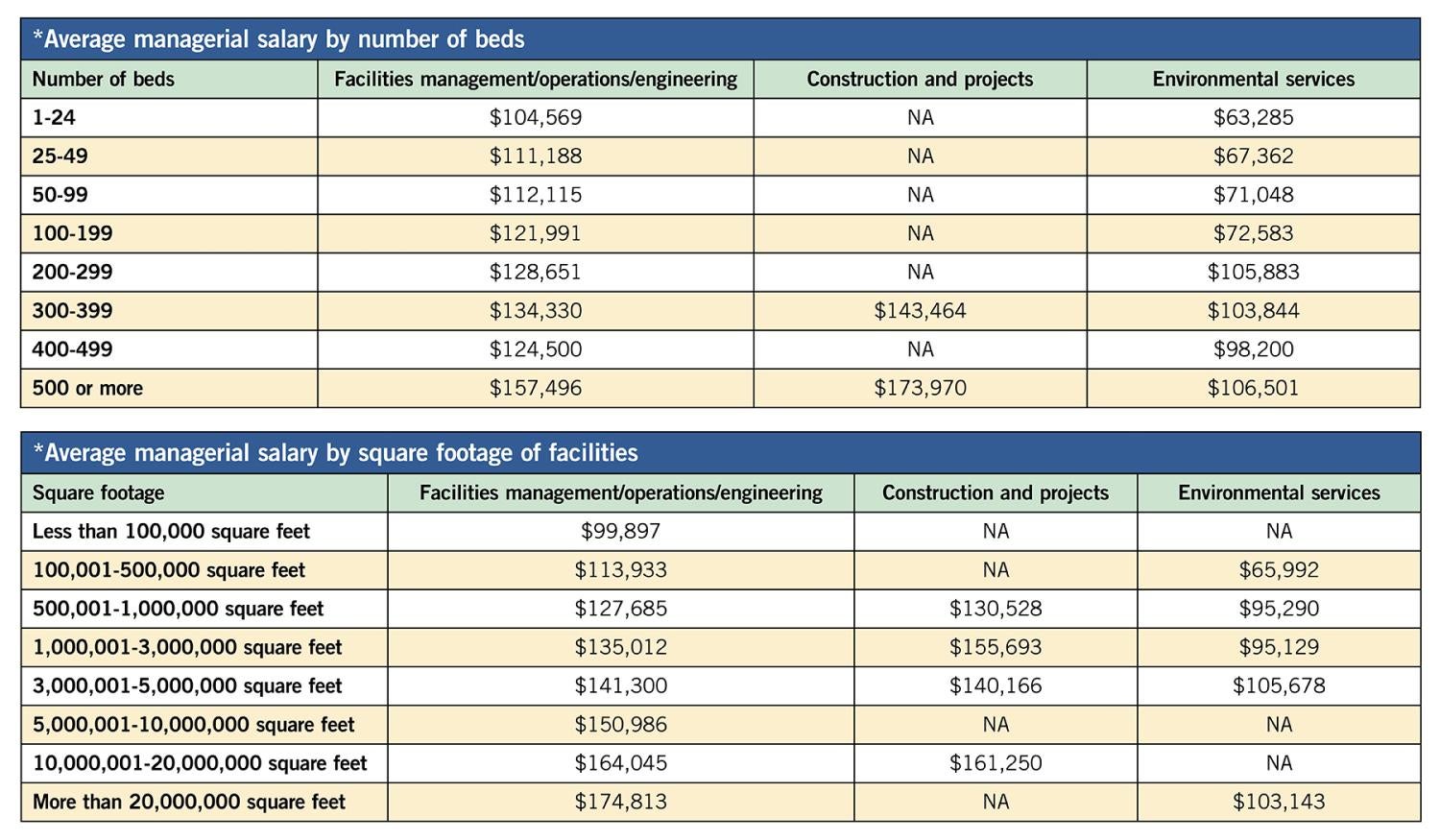
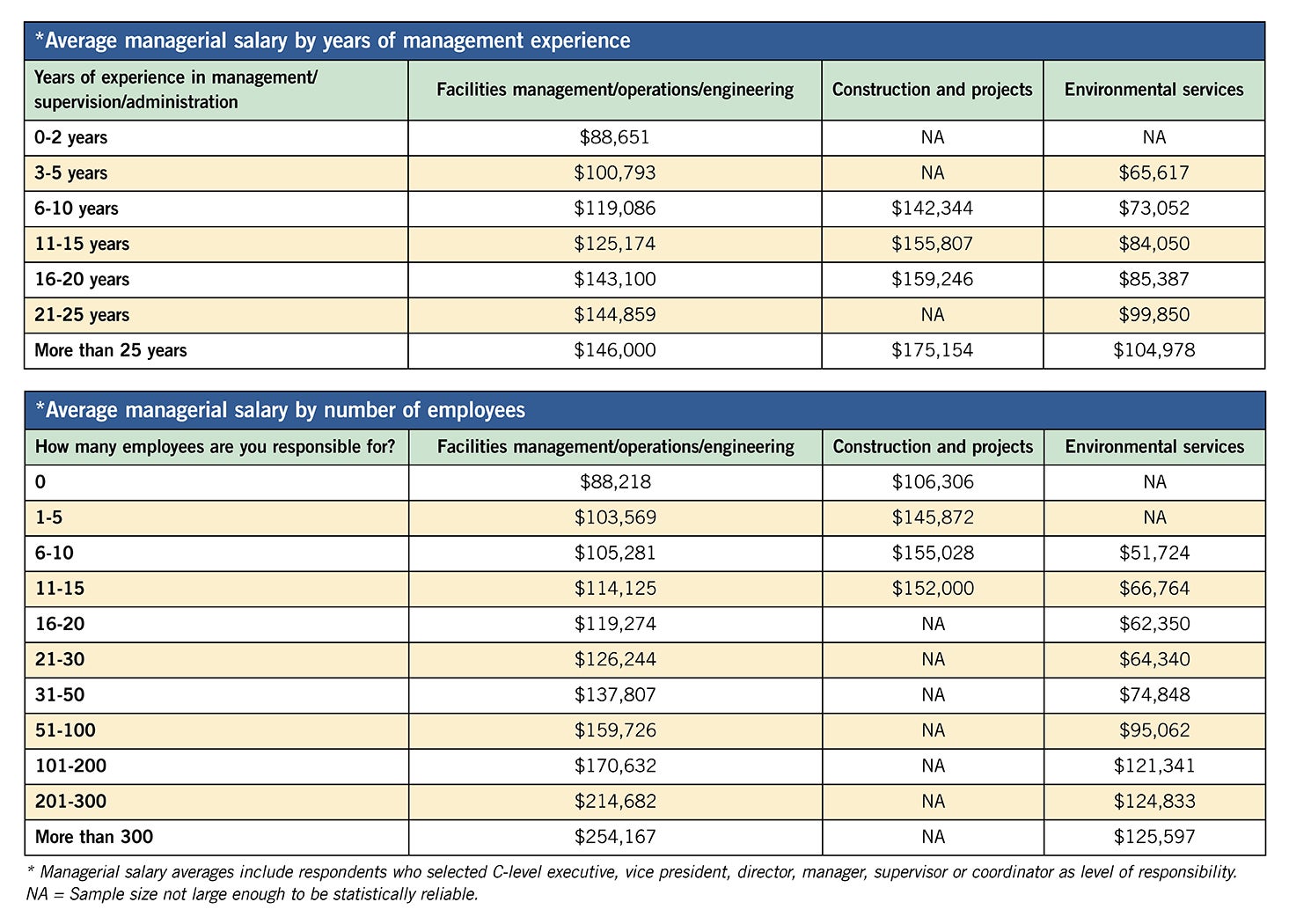
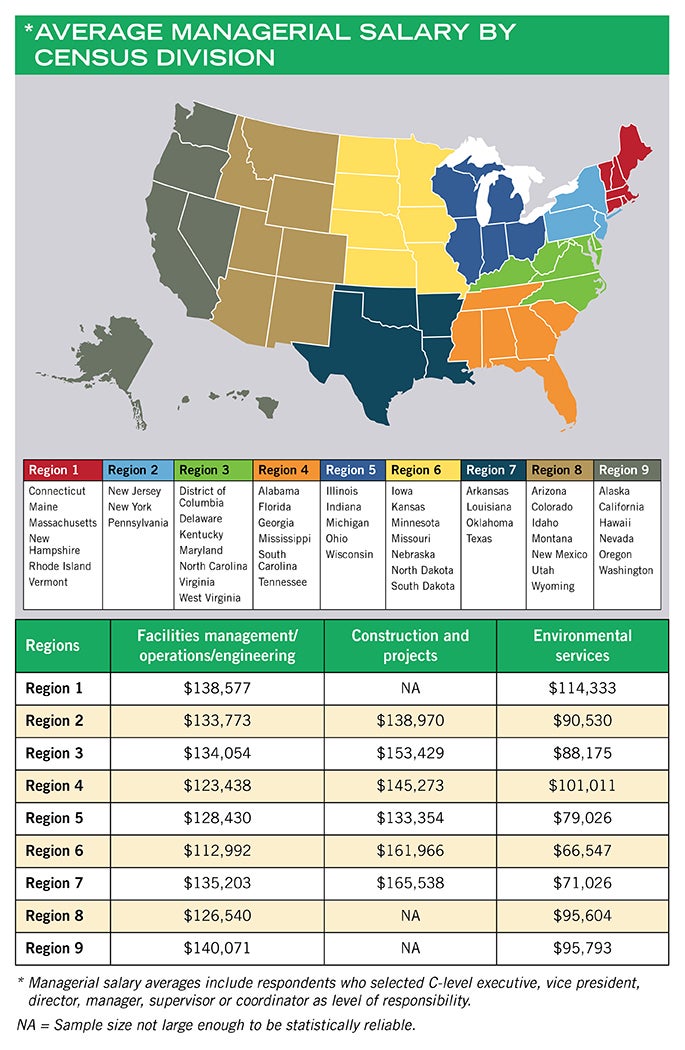
Facilities professionals have seen increases in salary since the 2023 Salary Survey. Sixty-six percent of survey respondents have seen an increase in their salary over the last year, with fewer than 1% reporting a decrease in pay. However, when taking a long-term view dating back to 2017, data shows that average salaries for facilities management and EVS have not kept up with the rate of inflation.

“The industry is facing a shortage of qualified candidates to replace our aging workforce. We are unable to compete with trade wages out in the field, which means we are not getting the best candidates applying for our open positions,” says one survey respondent. “The simple answer is higher wages. Not just for myself but also for our associates.”
Systems are listening, as there’s some evidence that average starting salaries are increasing. Since 2017, the HFM Salary Survey respondent pool has consisted of, on average, 10% of professionals with five or fewer years on the job and 30% to 35% of professionals with more than 25 years on the job. While the range of demographics surveyed has stayed roughly consistent, this year’s survey revealed that 19% of all survey respondents across roles hold a salary of $80,000 a year or less, compared to 45% of survey respondents in 2015 making that amount. This could point to a shift where lower salaries of $80,000 or less are becoming rarer and salaries above that mark are increasing.
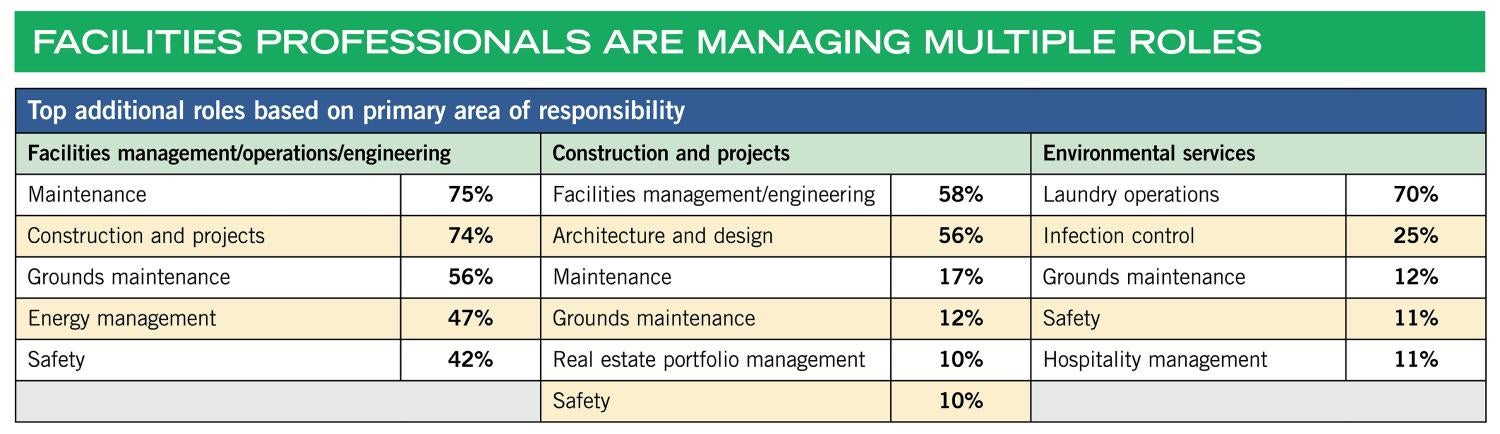
Facilities professionals point out that being involved in discussions around compensation is important for their department to attract candidates with the appropriate skill sets. What’s more, leaving facilities leaders out of these conversations often proves costly for health systems. Several survey respondents noted losing highly qualified candidates as a result of out-of-touch discussions led by administrative staff unfamiliar with facilities operations (see sidebar on page 30).
As one survey respondent shares, “I was not included in a recent hiring. After the hire was made, my technical assessment revealed a severe lack of knowledge in [the] required fields for which he was hired. This ultimately led to having to let the individual go and begin interviews again.”
Labor shortages, increased demands
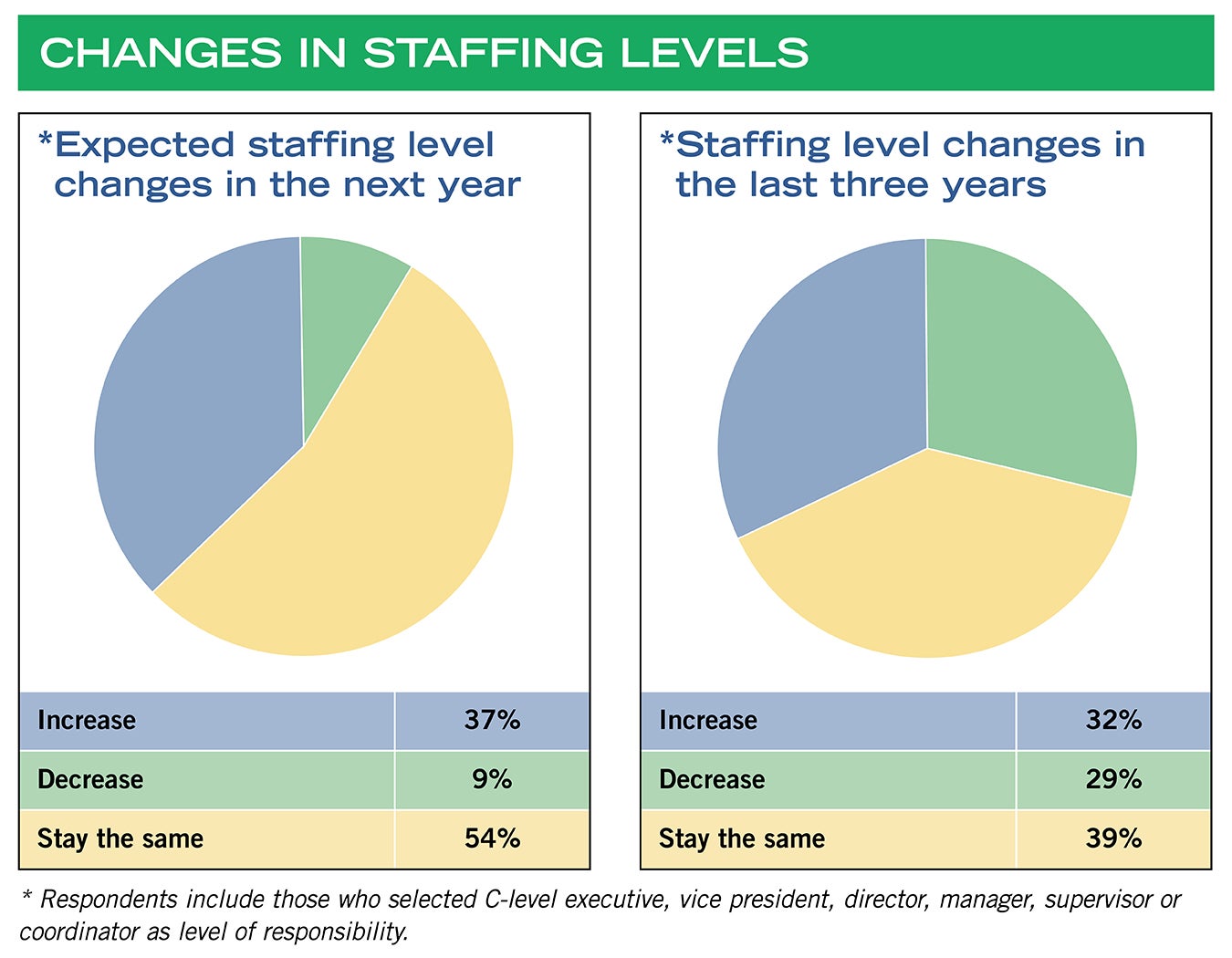
Losing qualified candidates is a tough blow for resource-strapped facilities. The Salary Survey revealed that the leading factor influencing job dissatisfaction was related to inadequate staffing or resources (50%). This lack of labor can make it even more difficult to deliver flexibility, but leaders are looking for creative ways to thread this needle.
Danielle Gathje, MBA, CHFM, SASHE, vice president of hospital operations for Fairview Health Services and St. John’s Hospital in Maplewood, Minn., and 2026 ASHE president-elect, says that as a good steward of resources, it’s up to facilities leaders to identify strategies that reduce this on-demand burden for employees. As part of planning for a 200,000-square-foot expansion at St. John’s, Gathje is driving the move away from high-pressure steam boilers. In the new facilities, licensed high-pressure steam boiler engineers will still be available around the clock but won’t need to check the boilers every two hours.
“That will free up a ton of time,” Gathje says. “It will bring a lot more satisfaction not only to the engineers but also to the staff who are asking for work orders or trying to get a hold of them when something goes wrong but they can’t because they have to do these mandatory two-hour checks.”
Mark Sears, CHFM, CHSP, SASHE, safety manager for Faith Regional Health Services in Norfolk, Neb., says his department has taken a similar approach to redesigning work. Among other steps, Faith Regional has committed to ensuring facilities are survey-ready at all times.
“It doesn’t happen overnight,” Sears says. “It took a couple years to get there. But now, if we get a text on a Sunday — which has happened — that says Joint Commission could be here on Monday, it’s OK. I show up an hour early to brush up on some things, and I don’t get that anxiety I used to have.” This and other process changes have enabled greater work-life balance within his department.
To strike a better balance in his role, Sears says, he’s learned how to better delegate tasks. He’s also leaned on ASHE colleagues as a resource. “I explain the challenge I’m facing, and they get it. They’ve been there, and they can make suggestions on how to get through it,” he says.
Hatton adds that, in some cases, balance is only possible by better prioritizing labor needs. “Maybe we get rid of some of these tasks that aren’t delivering value. We need to start asking if we can get rid of some of these regulatory burdens … that don’t add value to patient care or safety or the bottom line. ‘Why’ is a powerful word that is underutilized in our [field],” he says.
Focus on clinical outcomes
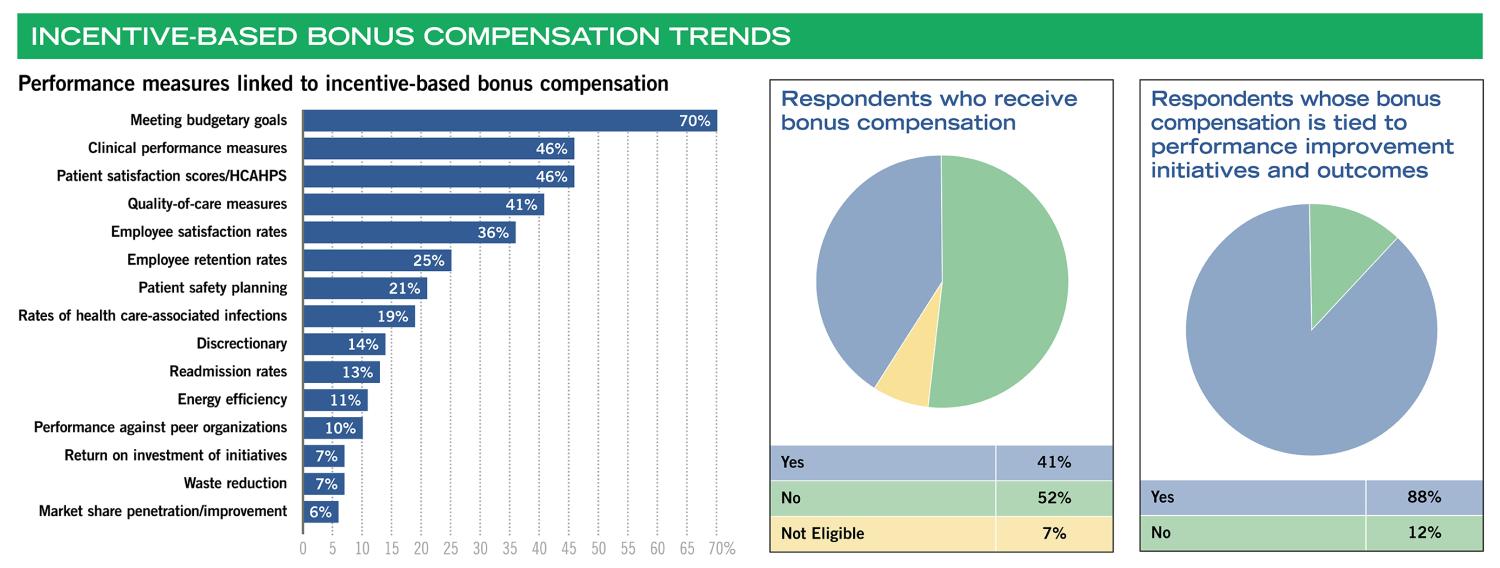
Cash bonuses are returning to many systems, with 41% of survey respondents receiving a cash bonus in 2025. This is an increase over 2023 (38%) but still down from the 2021 high of 46%. Of those professionals receiving bonuses, more than ever (88%) receive compensation in connection to hitting a specific performance improvement initiative.
The outcomes to which bonuses are tied, however, are shifting. Systems seem to be putting less emphasis on the facilities department’s role in meeting budgetary goals (70% in 2025, down from 86% in 2023 and 2021) and greater weight on their teams’ impact on clinical performance measures (46% in 2025 compared to 21% in 2023).
Hatton credits this change to the work being done to break down the silos across departments. For bonuses at Memorial Hermann, he says, “There’s a weighted average of at least three or four different areas to force us all to work together more and act as one united group versus operating in silos.” He adds, “I think that trend is going to continue. Let’s face it: it’s the smart thing to do.”
Facilities professionals can use this understanding of their work’s impact on patient outcomes to better advocate for funding for essential equipment. As more health systems tie facilities professionals’ bonuses to patient outcomes, it becomes easier to connect the need to modernize infrastructure, for example, to patient outcomes.
As Gathje puts it, “There are so many different components to health care, but we all impact people. We need to take care of the building that takes care of the people.”
Related article // Influence on employee management decisions
As health care facilities management leaders explore solutions to ongoing challenges in finding qualified talent, many are recognizing the value of hiring employees who fit the organizational culture and training those employees on skills once they are hired. By being involved in human resources-related decisions, these leaders are finding they can make hiring and firing decisions that shape highly motivated teams that work well together.
Click chart to expand and view more data
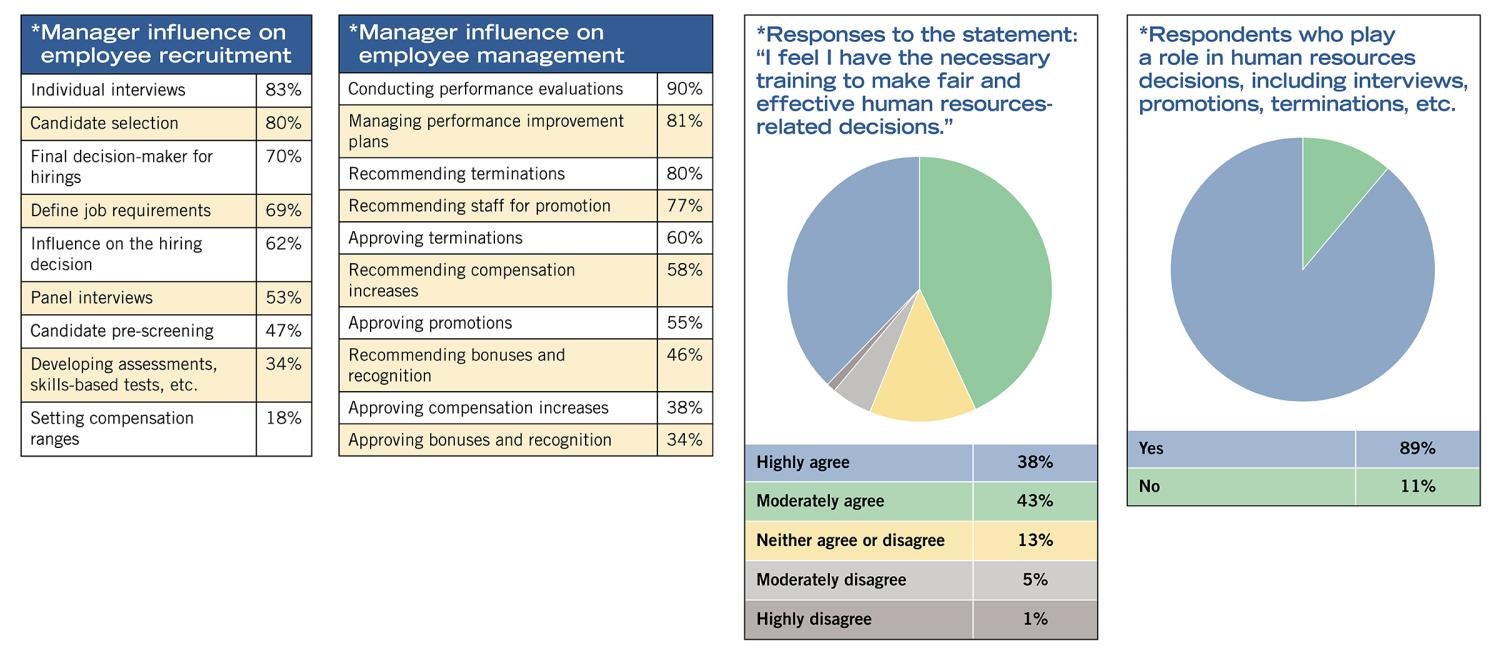
The 2025 Salary Survey, conducted by the American Society for Health Care Engineering’s Health Facilities Management magazine, found that 89% of facilities leaders play a role in human resources-related decisions. Anonymous respondents to the survey shared numerous examples of how their involvement in this process has impacted their team’s culture and morale.
One professional shared that his involvement in this process gave him an opportunity to bring in a talented health care professional from outside the facilities department. “I saw their passion for growth and potential to contribute at a higher level, so I made the case to recruit them onto our team,” the survey respondent shared. “The result was even better than expected. Not only did the individual thrive in their new role, but their contributions also elevated the performance of the entire team.”
“My perspective helped highlight qualities in a candidate that aligned well with both the technical skills we required and the culture of our organization,” commented another survey respondent. “The individual hired quickly became a strong contributor, which improved team efficiency and morale. Being part of that process was fulfilling because it showed me how valuable collaboration can be in shaping a team and how the right hire can make a lasting positive impact on both staff and the organization as a whole.”
Conversely, several survey takers shared that their ability to terminate low-performing employees enables them to keep their team’s performance high. One respondent commented, “I've had to let multiple people go as part of the accountability process, and general morale in the department improved immediately.”
Other survey takers highlighted the importance of involving the entire team in these decisions. As one professional said, “The more we get team members involved with the hiring of their direct team, the better. This allows team members to give their thoughts on a potential hire rather than being forced to adapt to a person they had no choice in selecting.”
Megan Headley is a freelance writer based in Fredericksburg, Va., and Jamie Morgan is senior editor of Health Facilities Management.
Related Articles

Nuvolo launches regulatory compliance management to tie survey readiness directly to maintenance work
New capability maps regulatory standards to assets so healthcare organizations can build compliance evidence as work gets done.

Optimizing healthcare infrastructure through enterprise asset management
How Montefiore Einstein implemented a single source of truth for building spaces and infrastructure assets.

Security ecosystem helps manage risk
City of Hope partnered with Motorola Solutions to developed a layered security strategy for its 100-acre California campus.