

Healthcare building and material costs accelerate across all categories
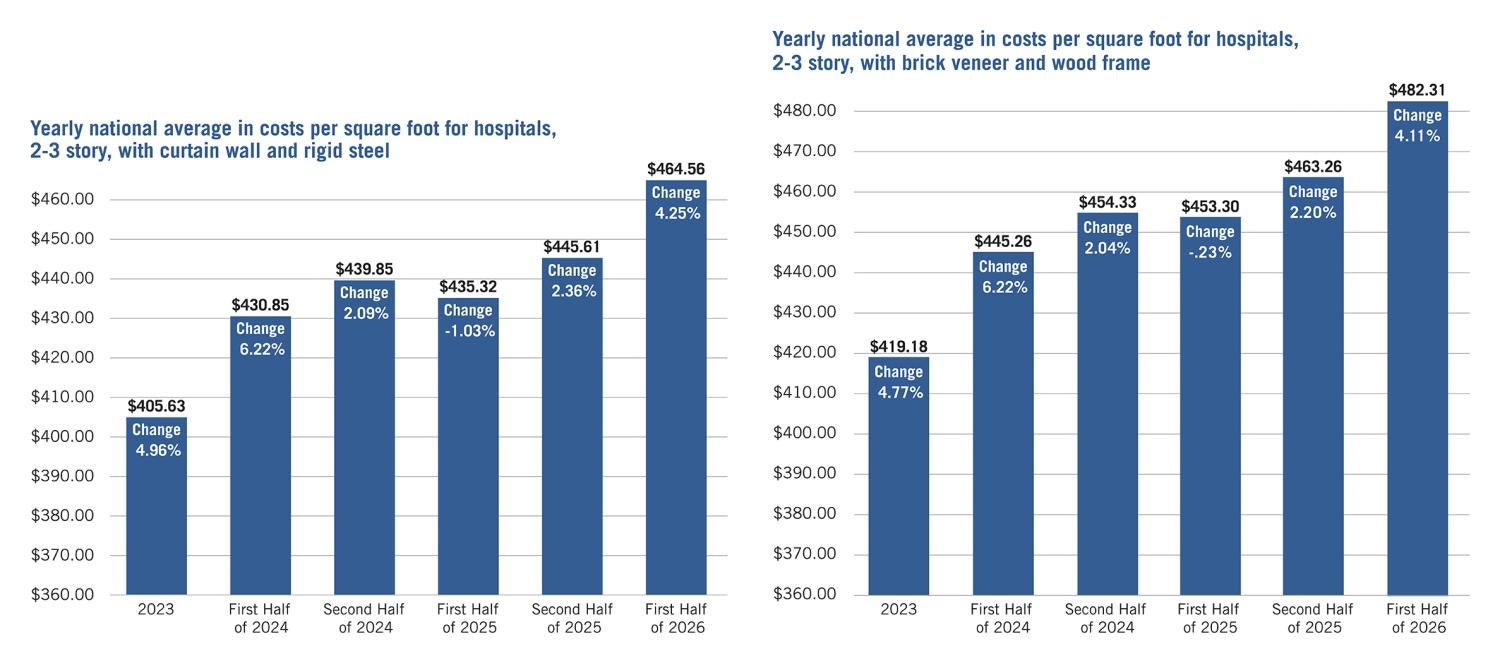
Over the first half of 2026, costs in healthcare construction rose across the board. By July, hospital costs rose 4.1% to 4.3% since the start of the year, and year-over-year costs increased by 6.2% to 6.4%.
Based on square foot estimating data from international construction data and services firm Gordian, most of the increase in costs could be attributed to price increases in raw material inputs. Material costs for healthcare buildings rose 3.3% to 6.5%, while labor costs only increased 1.1% to 2.2%.
Click image to expand
This rise in material costs has impacted all geographic areas, but overall costs seemed to be rising even faster in Pacific region cities like Los Angeles, San Francisco and Seattle.
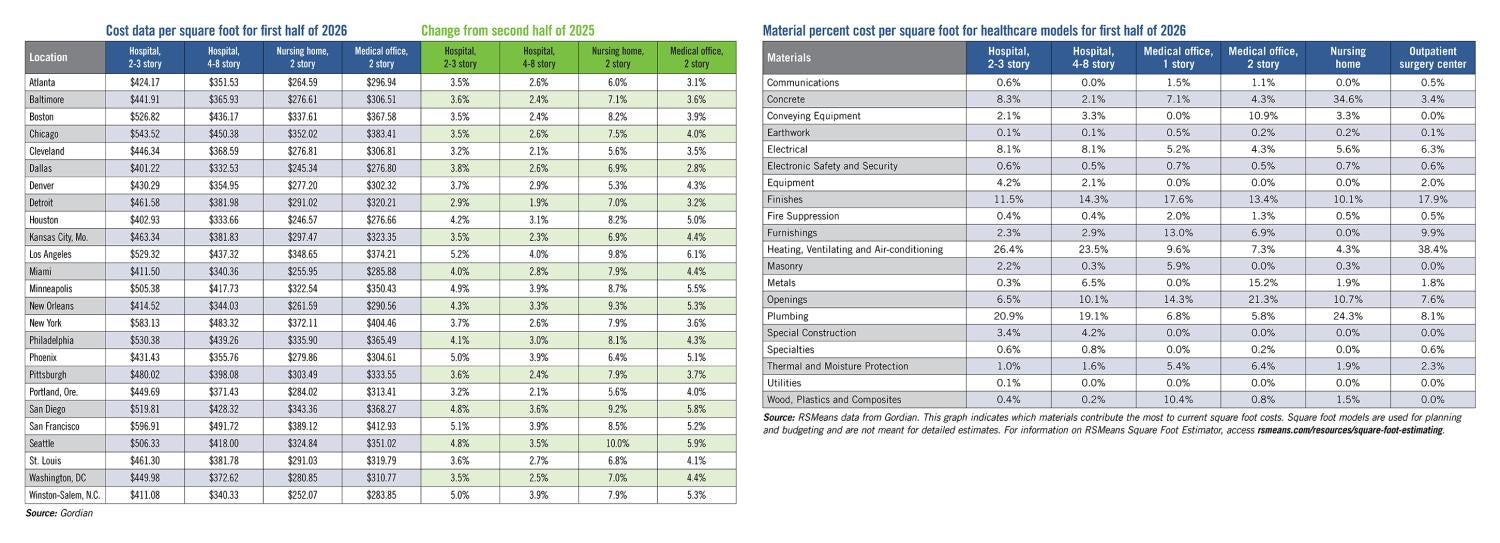
Among the healthcare building models tracked by Gordian, nursing homes were seeing the fastest cost increases, primarily due to soaring plumbing costs.
Costs in plumbing for the building models rose by around 6% over the first half of the year, and that’s on top of an 8% to 9% increase observed at the end of 2025. In addition to plumbing, furnishing costs were on the rise in medical offices and surgery centers.
Click image to expand
Gordian expects costs to continue trending upward, driven primarily by rising heating, ventilating and air-conditioning (HVAC) and steel input costs.
HVAC is facing demand pressures from the growing volume of data center construction projects. Additionally, steel is becoming more expensive due to the energy-intensive nature of production, and it’s probable that energy and fuel costs will continue to rise.
Adam Raimond is a program manager at Gordian, an international provider of data-driven solutions for all phases of the building life cycle. He can be reached at adam.raimond@gordian.com. Gordian provides this data column to Health Facilities Management semiannually.
Related Articles

Getting on the same page at the start of a project
How strong alignment resolves construction budget challenges before they become problems.
NFPA weekly update: Sept. 14-18
A tentative interim amendment on weapons detection systems was added to NFPA 5000, Building Construction and Safety Code.
The facilities manager’s role in reducing healthcare-associated infections
From multidisciplinary communication to establishing safety procedures for construction, remediation and maintenance, facilities teams play a critical hand in reducing patient infections.