

Lithium-ion battery safety in hospitals: buyer beware of 'simple solutions'
Editor’s note: This article was written with input from the American Society for Health Care Engineering’s Battery Safety Task Group. The task group is currently developing guidance on managing battery hazards. While this article is not part of its official guidance, it is being shared by the task group as timely and valuable information.
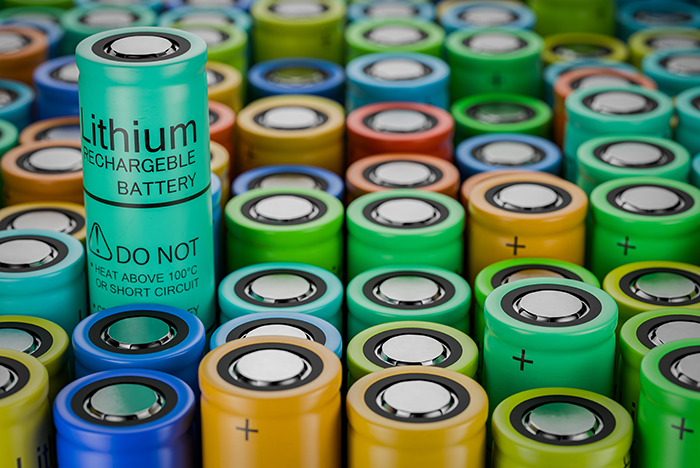
Building a layered safety approach is necessary to safely store lithium-ion batteries and prevent difficult-to-contain fires.
Image from Getty Images
Lithium-ion batteries are becoming increasingly common throughout healthcare facilities, leaving hospitals with a growing challenge: how to address battery fires. As awareness of battery hazards has increased, so has the market for products claiming to solve those hazards. While many of these products may have a role in a comprehensive battery safety program, healthcare facilities should be cautious about viewing any single product as a complete solution.
The risk of oversimplifying battery safety storage
One of the most common misconceptions heard in the field is that lithium-ion batteries can be safely stored in sealed containers, or that placing a battery in an airtight enclosure will somehow suppress a fire if one occurs.
In reality, lithium-ion battery failures are fundamentally different from many traditional fire hazards. During thermal runaway, batteries can generate intense heat and release significant amounts of flammable and toxic gases. Storage systems must account for heat generation, pressure relief and gas venting. A sealed container may actually create additional hazards by allowing pressure to build inside the enclosure, potentially increasing the consequences of a failure.
Battery storage solutions should be evaluated based on how they manage heat, off-gassing and expansion, not simply on their ability to contain a battery.
Fire blankets and battery pouches: proceed with caution
Another trend gaining attention is the growing number of battery storage bags, pouches and fire blankets marketed specifically for lithium-ion batteries.
While these products are often promoted as an easy mitigation strategy, healthcare facilities should carefully evaluate the evidence supporting their effectiveness. In some situations, products that cover or enclose a battery may trap heat, restrict visibility into a developing event or complicate emergency response efforts.
Underwriters Laboratories Inc. (UL) and the National Fire Protection Association have issued warnings regarding fire blankets marketed for electric vehicle fires, highlighting concerns about performance claims and potential limitations. Although those warnings were directed at larger battery systems, many of the same questions should be asked when evaluating products intended for smaller lithium-ion batteries. Facilities should seek credible testing data and understand exactly what a product was designed and tested to do.
A UL Listing does not tell the whole story
Another area where hospitals should exercise caution is product certifications and listings.
A common mistake is assuming that a UL Listing automatically means a product is effective for lithium-ion battery fires. In reality, UL Listings are highly specific. A product may be listed for one purpose while never having been evaluated for lithium-ion battery hazards.
When evaluating extinguishers, suppression products, storage cabinets or other mitigation equipment, facilities should ask a simple question: What specifically was this product tested for?
Many products are marketed as suitable for lithium-ion batteries, but finding evidence that they have been evaluated under conditions representative of a lithium-ion battery failure can be difficult. To date, there is no universally recognized fire extinguisher classification specifically for lithium-ion battery fires comparable to the familiar Class A, B, C, D or K ratings used for other fire hazards.
As a result, safety professionals should be careful not to assume that a UL mark, certification or marketing claim automatically confirms suitability for all lithium-ion battery incidents.
There is no “silver bullet”
Perhaps the most important lesson for healthcare facilities is that there is no single product that eliminates lithium-ion battery risk.
A battery cabinet, storage pouch, fire blanket, specialty extinguisher or suppression device may provide benefits under certain conditions. In many cases, something may indeed be better than nothing. However, none of these measures should be viewed as a stand-alone solution.
Effective battery safety programs rely on multiple layers of protection, including the following:
- Appropriate charging practices;
- Safe storage procedures;
- Employee education and training;
- Routine battery inspection and replacement processes;
- Identification of damaged or recalled batteries;
- Proper ventilation considerations;
- Emergency response planning;
- Incident reporting and investigation; and
- Risk assessments for higher-hazard battery installations;
Healthcare facilities should approach lithium-ion battery safety with the same rigor they apply to other high-risk systems.
Before purchasing a product that claims to solve the problem, ask for test data, understand the limitations of the technology and evaluate how it fits within an overall risk management strategy. The key question is not whether a product exists, but whether it effectively addresses the specific hazards associated with thermal runaway, fire propagation, off-gassing and emergency response.
Focus on risk management, not product marketing
The rapid growth of lithium-ion battery-powered devices in healthcare means that facilities managers will continue to encounter new products claiming to improve safety. Some may ultimately prove valuable. Others may provide only limited benefits or create unintended consequences.
The goal should not be to find a product that promises to eliminate risk. The goal should be to understand the hazards, evaluate potential controls and implement a layered strategy that reduces the likelihood and severity of an event.
In battery safety, skepticism is healthy. A product advertisement, a certification mark or a vendor's claim should be the beginning of an evaluation — not the end of it. Hospitals that take the time to do their research, understand the limitations of available technologies and build a layered safety approach will be far better positioned to manage the risks associated with lithium-ion batteries safely and effectively.
Chad Beebe, AIA, CHFM, CFPS, CBO, FASHE, is deputy executive director for ASHE Regulatory Affairs.
Related Articles

NFPA weekly update: Sept. 28 to Oct. 2
A tentative interim amendment to NFPA 99, Health Care Facilities Code, on medical gas piping is open for public comment.

Healthcare may hold the key to long-duration energy storage adoption
Reflections from a healthcare perspective on the Long Duration Energy Storage Summit and the need for resilience and reliability.

County system cuts facility energy costs through partnership
Utility enhancements have driven hundreds of thousands in savings since 2023.