

A recap of the 2026 PDC Summit
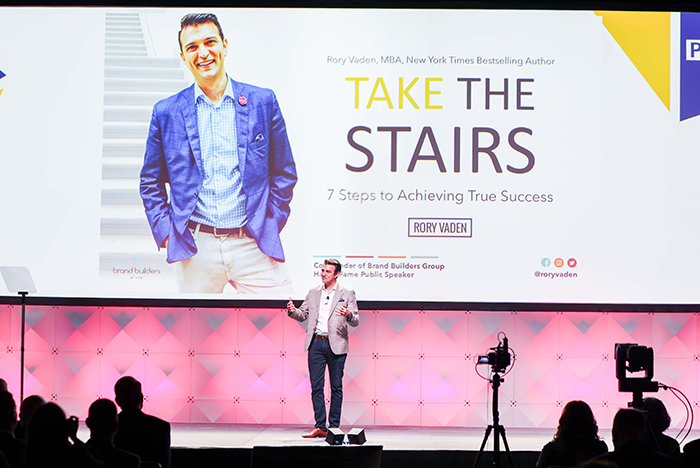
2026 PDC Summit keynote speaker Rory Vaden delivered a message on identifying and breaking habits of procrastination.
Image courtesy of ASHE
The 2026 International Summit & Exhibition on Health Facility Planning, Design & Construction™ (PDC Summit™) saw a record-breaking attendance of more than 4,100 professionals from all areas of health care PDC. The interdisciplinary conference, hosted in Houston last month by the American Society for Health Care Engineering (ASHE) and Supporting Organizations, included more than 90 general, breakout and discovery stage sessions and more than 280 speakers.
The conference kicked off with an award ceremony honoring the 2026 Vista Award winners and a keynote address from Rory Vaden, cofounder of Brand Builders Group and a New York Times best-selling author. Vaden shared insights from his book Take the Stairs: 7 Steps to Achieving True Success. Vaden’s simple but time-tested message centered on the truth that success doesn’t come from quick-fix strategies, but rather sacrifice, commitment, focus, integrity, schedule, faith and action.
During his PDC Summit keynote, Vaden homed in on how to overcome procrastination by first identifying the three common types of procrastination — classic, creative avoidance and priority dilution — and how to embrace the paradox principle of sacrifice, which commits to doing hard tasks now to create a better future.
“The one thing successful people and teams have in common is that they do the things they know they should be doing even when they don’t feel like doing it,” Vaden said during his keynote. Learn more about Vaden's research on how to overcome procrastination in the Q&A below.
On Day 2 of the summit, the Center for Health Design, one of the summit’s Supporting Organizations, honored its annual award recipients, including a discussion with its 2026 Changemaker Award recipient Scott Zeller, M.D., vice president of acute psychiatry at Vituity. Zeller sat down with Mardelle Shepley, M.Arch., M.A., D.Arch., emerita professor at Cornell University in the Department of Human Centered Design and emerita director at Cornell Institute for Health Futures, and Francis Pitts, FAIA, FACHA, OAA, founding partner at architecture+, to discuss his groundbreaking work in developing behavioral health environments using the EmPath (Emergency, Psychiatric, Assessment, Treatment and Healing) model.
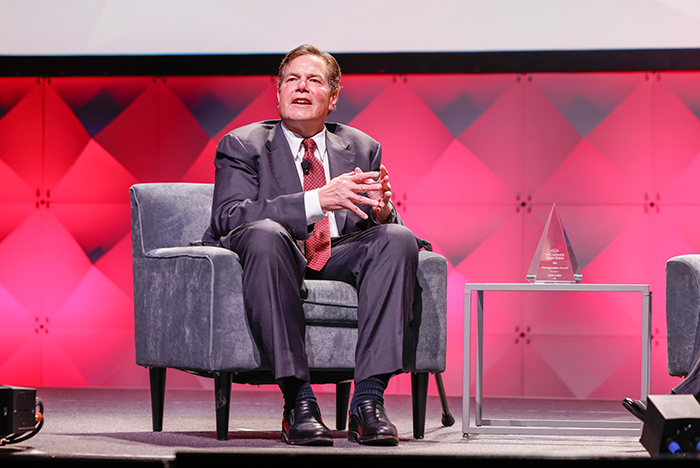
Scott Zeller, M.D., received the 2026 Center for Health Design Changemaker Award and sat down to discuss his groundbreaking work to improve behavioral health care and design.
Image courtesy of ASHE
The three-day conference closed with a panel discussion with representatives from the Supporting Organizations on building resilient health care facilities. Moderated by ASHE Deputy Executive Director Chad Beebe, AIA, CHFM, CFPS, CBO, FASHE, the panelists touched on the questions that planning, design and engineering communities should be asking in order to produce facilities that can withstand and recover from everything from natural disasters to man-made events and cyberthreats.
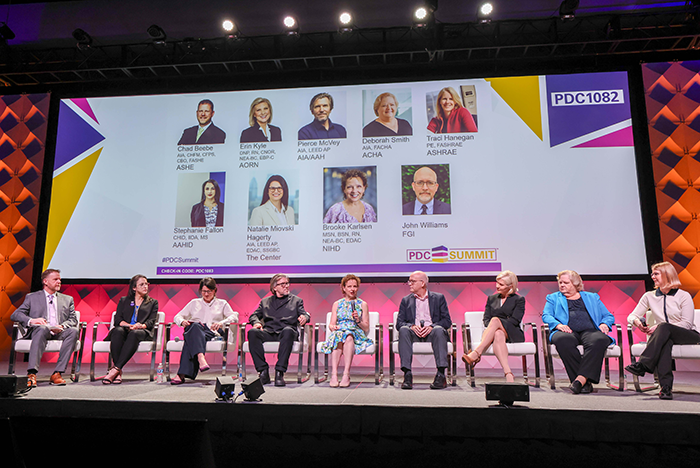
The conference closed with a discussion among the summit's Supporting Organizations on building resilient health care facilities.
Image courtesy of ASHE
Breakout session standouts
Many of the event’s breakout sessions took a future-focused approach exploring new techniques and standards, such as “Modular Hospital Construction: Improving Value in Health Care PDC” and “Navigating the 2026 FGI Codes: What’s New, What’s Gone and What You Need to Know.” Both sessions were among the top 5 of most-attended sessions.
The other breakout sessions rounding out the top 5 of most-attended took a closer look on how to manage construction costs and schedules, including “Building for Tomorrow: A Blueprint for Healthcare Expansion,” “Health Care Construction is Expensive — Don’t Mess it Up!” and “Managing a Complicated Expansion Under a Constrained Schedule.”
The summit also featured a perennial favorite — the American Institute of Architecture/Academy of Architecture for Health & ASHE PDC Student Design Challenge™.
This year’s competition included students from the University of Texas at San Antonio, Kent State University, University of Utah, University of Colorado Boulder and Ball State University. The architecture, construction, engineering and nursing students were tasked with designing and developing a complete health care program for an oncology clinic in Houston’s historic Third Ward, nicknamed “the Tre.”
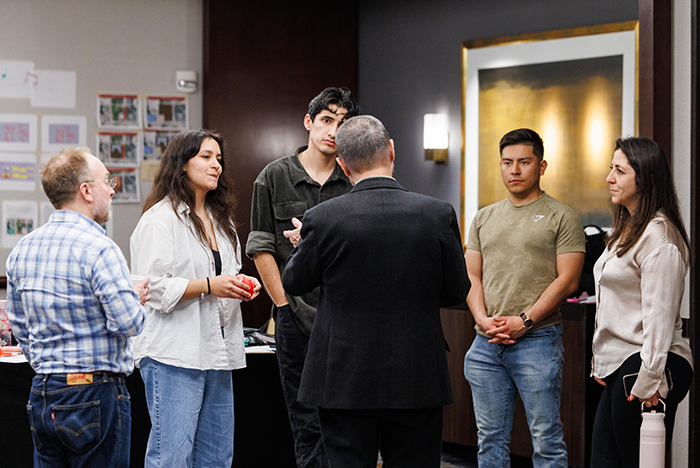
Students and mentors have a brainstorming session during the AIA/AAH & ASHE PDC Student Design Challenge.
Image courtesy of ASHE
The 48-hour charette, which drops participants into an immersive, interdisciplinary experience of health care design collaboration, is a microcosm of the summit itself. As Gabe Auffant, AIA, ACHA, LEED AP BD+C, health care client leader at DLR Group and outgoing chair of the design challenge, put it, the exercise is “not about my idea or your idea, but the best idea.”
Stay tuned for more “best ideas” in the PDC space that will certainly be discussed at the 2027 PDC Summit, which will take place Feb. 28 to March 3, 2027, in New Orleans. Sign up for updates on next year’s PDC Summit and learn about the upcoming Health Care Facilities Innovation Conference® taking place Aug. 2-5, in Minneapolis.
2026 PDC Summit Supporting Organizations
The American Society for Health Care Engineering joined a coalition of Supporting Organizations dedicated to optimizing the health care physical environment to present this year’s event.
Those organizations include: the Academy of Architecture for Health, a Knowledge Community of the American Institute of Architecture; American Academy of Healthcare Interior Designers; American College of Healthcare Architects; Association of periOperative Registered Nurses; Association for Professionals in Infection Control and Epidemiology; ASHRAE; The Center for Health Design; Facility Guidelines Institute; International Association for Healthcare Security and Safety; and Nursing Institute for Healthcare Design.
Related Articles
Designing pediatric facilities for regulation and resilience
Lessons learned from K-12 facilities can help create health care facilities that allow kids and young adults to heal and thrive.

ED expansion plans will advance care, enhance flow
Renovation will bolster capacity for the Baton Rouge, La.-area Level 1 trauma center.

3D-printed models help visualize design changes
Hospital expansion project employs scale models to enhance the design of new operating rooms.